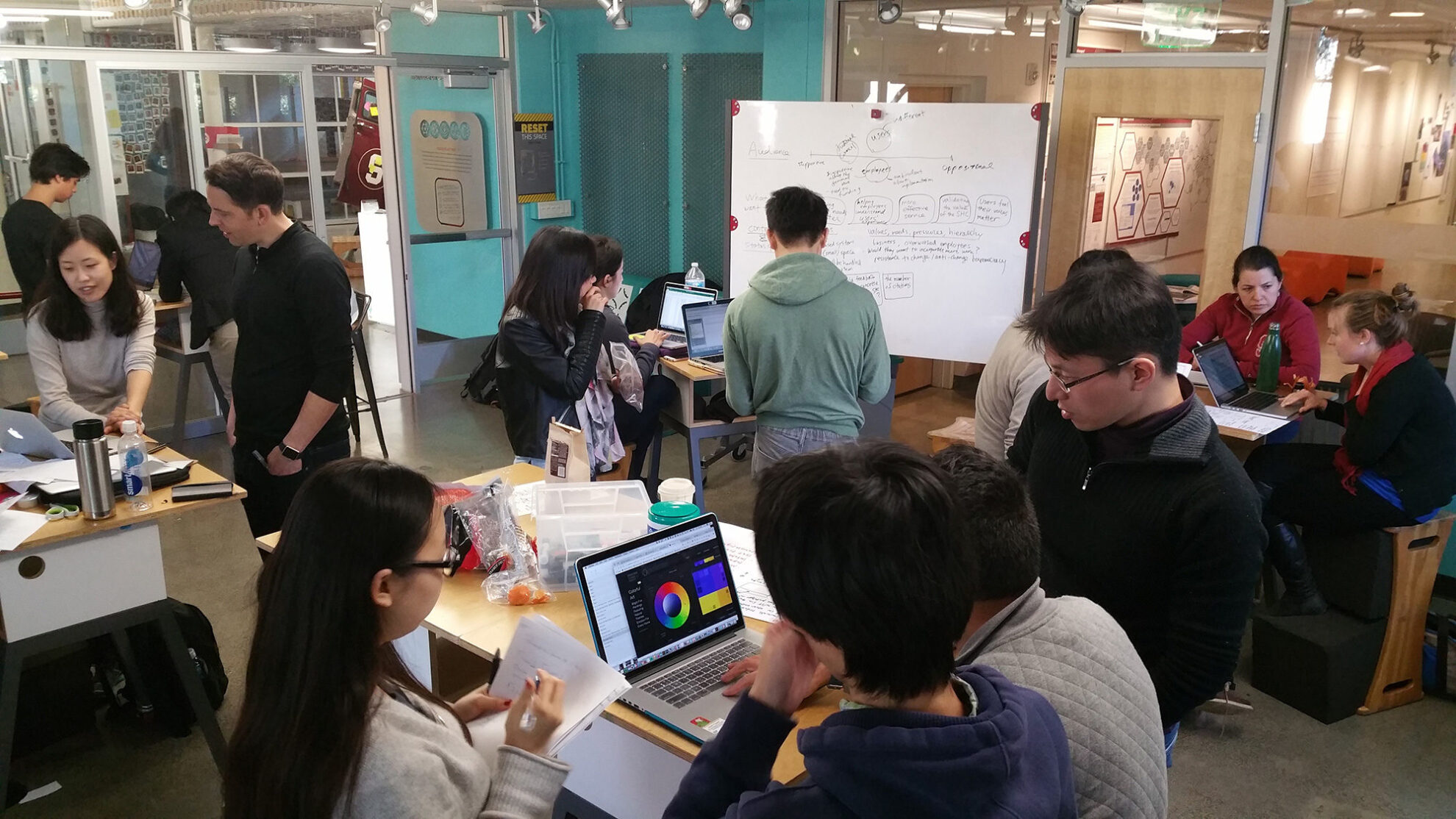
An R&D Lab for a better, people-centered justice system.
Stanford Legal Design Lab team researches, designs, and develops new interventions to ensure equal access to justice for all.
We build and study new technologies, services, and policies that can empower people who are dealing with legal problems. We coordinate people, ideas, infrastructure, and data that can scale justice innovations.
We are working towards a future where courts, legal services, Internet platforms, community groups, government agencies, and other justice institutions better help people resolve their justice problems, protect their rights, and improve their communities with dignity and empowerment.

Our Mission

We train students and professionals in human-centered civic innovation and public interest technology.

We develop & test new models of user-friendly, accessible, and engaging legal services, technologies, and policies.

We coordinate leaders, infrastructure, and policies to scale promising practices that can make the justice system more accessible and equitable.
Our Current Tracks
The Legal Design Lab has two strategic tracks in 2026-2027: AI and Access to Justice, and Justice System Innovation.
Past strategic tracks have included Eviction Prevention, Better Legal Internet, Virtual Legal Systems, Smart Legal Communication, Public Interest Technology, Regulatory Reform, Contract Design, Privacy by Design, Legal Design Methodology, and Law Firm Innovation.
Building the Ecosystem
The Legal Design Lab is working both on the infrastructure of responsible AI (gathering data, creating labeled datasets, establishing taxonomies, creating benchmarks, and finding pilot partners) and on the design and development of new AI tech and service pilots.
Legal Help Commons
The Legal Help Commons is shared infrastructure for the access to justice sector. Legal aid organizations, courts, and technology partners across the country are working together to define what legal help AI should do, how to test it, and what quality standards it should meet. The Legal Help Commons is where that shared work lives: reference architectures, conformance standards, evaluation tools, and implementation playbooks that any team can adopt.
Working groups of practitioners, technologists, and researchers are developing shared agendas, standards, and blueprints for voice AI intake and triage and for eviction answer and defense preparation. Cohorts are forming for housing, debt, and reentry. Our interactive design workshops with court leaders, legal aid lawyers, access to justice coordinators, and technologists now run through the Legal Help Commons, where they focus on how AI can be deployed for access to justice and what risks need to be planned for.
Visit the Legal Help Commons or join a working group.
JusticeBench
JusticeBench is an initiative by the Stanford Legal Design Lab to help researchers, technologists, and public service leaders evaluate and build better AI systems for civil legal help. It hosts projects, benchmarks, datasets, and community-contributed tools that aim to ensure AI can responsibly support access to justice, especially in domains like eviction, debt, custody, and government benefits.
Researchers and builders can submit projects, ideas, and datasets through the JusticeBench contribution form. Visit JusticeBench.
Justice AI Co-pilots
With courts and legal aid partners, and with our students, we build and test AI co-pilots for specific legal help workflows. We are partnering with the Legal Aid Foundation of Los Angeles (LAFLA) on eviction matters and Legal Aid Services of Oklahoma (LASO) on reentry debt. This work is supported by a grant from the Gates Foundation. We are also developing other co-pilots in housing and reentry.
We document each co-pilot on our AI and Access to Justice page, catalog it on JusticeBench, and profile it in the Legal Help Commons once it is ready for other organizations to replicate.
AI and Access to Justice
On this track, the Legal Design Lab researches how people use AI to deal with their legal problems, what better systems they want, and how to improve the quality and accountability of AI platforms as they operate in the legal domain.
See our main page on AI and Access to Justice.
AI for Legal Help class: AI for Legal Help is a studio course that our Legal Design Lab team has taught yearly since 2023. It is cross-listed at Stanford Law School and the d.school, and attracts students from across many different departments on campus. Students work with our team and with legal aid and court partners on scoping, prototyping, testing, and creating evaluation plans for new AI-powered ways of serving the public’s legal needs.
In 2026, we ran the class as a two-quarter sequence: Winter quarter covered the initial scoping and prototyping of a new solution, and Spring quarter covered setting evaluation standards and refining the solution through extensive testing. Students have partnered with public interest organizations like the Legal Services Corporation, American Bar Association, LA Courts, and legal aid groups around the country. Read the 2026 class report or see the class page.
Workshops on AI and access to justice: Our Lab co-organizes a series of AI and access to justice workshops at the JURIX and ICAIL conferences, which we have run since 2024. The most recent was the AIDA2J Workshop at ICAIL 2026 in Singapore on June 8.
We partner with legal aid groups, courts, and non-profits to design, pilot, and scale innovative new access to justice initiatives.
Justice System Innovation
On this track, the Legal Design Lab creates new services, tech, and policies that can improve people’s access to the civil justice system.
This track includes classes, user research, software and AI development, and peer cohorts.
Main website: Find our Justice Innovation website that profiles methods, projects, and principles to use when developing new efforts to improve the justice system.
Access to Justice Network: Our Lab hosts and stewards the Access to Justice Network, a community of more than 1,300 judges, court managers, attorneys, librarians, researchers, and technologists. It is open to justice professionals worldwide, as well as professionals who work with them to make effective, innovative, and well-designed justice systems.
The Access to Justice Network is the successor organization to the Self-Represented Litigation Network (SRLN). SRLN was formed in 2005, and has been a community of practice for people working on access to justice, civil justice reform, legal empowerment, and human-centered design of the legal system. Beginning in 2025, SRLN’s community of practice and many of its resources were assumed by the Access to Justice Network, hosted at the Stanford Legal Design Lab. The Network runs an email list, working groups on topics including legal forms, legal self-help websites, and access to justice research, and a biannual conference. Join the Access to Justice Network.
Forms and Efiling: With the Stanford Center on the Legal Profession, the Lab has launched the Filing Fairness Project to ease people’s ability to participate in court processes.
Language Access: Our Lab has partnered with state courts and legal aid groups to study how people want language access support through technology and human services. Read the report from our 2019 class to the California Judicial Council.
The Lab has taught classes and run workshops on innovations in the eviction system, expungement and clearing records, guardianships and conservatorship, debt and money problems, and estate planning.
Past Years’ Tracks
The Legal Design Lab has had many different projects since it began in 2013. Please explore some of our past work below.
We partner with national non-profits, local and federal government agencies, and justice system professionals to identify & spread the most promising initiatives to prevent evictions & forced displacement.
Eviction Prevention work at Legal Design Lab
On this track, the Legal Design Lab built strategic networks, identified the most promising pilots to prevent evictions, and evaluated what works.
From 2019 to 2024, within the broader category of access to justice innovation, our Lab focused on eviction prevention and housing justice in particular. We continue to build on this work in our current projects.
Eviction Prevention Learning Lab cohort: The Lab worked with the National League of Cities to run the multi-city peer cohort, the Eviction Prevention Learning Lab. It brought city governments, courts, legal aid, and social service providers from over 30 cities together to identify and spread best practices in stopping evictions and promoting access to justice.
Eviction Innovation site: We documented promising practices in the space on our Eviction Innovation platform. This website has case studies, guides, and repositories of resources to help policy-makers and service providers develop better strategies and interventions for preventing evictions.
Legal Help FAQs: The Lab runs a national question and answer website, Legal Help FAQs, for COVID-19-related eviction questions. It built the site in Spring 2020 to provide a clear, authoritative source on local laws protecting people from eviction.
NAACP Housing Navigators: Through our series of classes on Justice By Design: Eviction, our Lab team and our Stanford students partnered with the NAACP to refine and scale their Housing Navigator program. We helped them design their website, social media campaign, and service design & strategy.
ABA Eviction, Housing Stability, and Equity Task Force: Lab Executive Director Margaret Hagan is the chair of the American Bar Association’s SCLAID Task Force working on eviction prevention and housing justice. This group has worked on national standards on housing law and on promoting innovative new services and policies across the country.
Eviction Summons Redesign: We have worked with courts in Ohio, Montana, and more to redesign the notices they send out to tenants who have been sued for eviction. We have worked with them to make these official court documents more engaging, comprehensible, and user-friendly. We are now studying in Los Angeles whether redesigned summons can reduce default rates at eviction hearings.

We make the Internet a better place to find legal help.
Better Legal Internet work at Legal Design Lab
From 2016 to 2022, the Legal Design Lab focused on improving how people find legal help on the Internet. We built key data infrastructure for R&D, contributed to AI and digital analysis initiatives, and led cohorts of practitioners through improvements to their court and legal aid websites.
In this track, our work aimed for a near future when people can go online, ask search engines or social media about their life problem, and get local, authoritative, user-friendly legal help. We continue to build on this work in our current AI and access to justice projects.
Main website: Visit our Better Legal Internet website to find more detailed descriptions of the projects mentioned below, on improving search, social media, website design, and data analysis.
Legal Help Dashboard: This webpage from the Lab guides legal help website administrators through the main steps to improving their website. Check up on your tech, design, content, and search rank. Follow our guides to improve on all four areas. This page provides tools, guides, and ranks to make legal aid and court websites better able to serve the public.
LIST Taxonomy: Our Lab has established a master taxonomy, Legal Issues Taxonomy (LIST), of all the main legal issues that people in the US face. These standardized codes can be used by organizations, tech providers, and others who are trying to better map, categorize, and develop tech about legal needs.
Schema Markup SEO Tool: How do legal aid and court websites show up when people search Google for help? We built a tool to help these websites show up higher and to the right audiences. The Schema Markup tool lets legal service groups create code that tells search bots from Google, Bing, Yahoo, and other search engines exactly what is on their website, what jurisdictions it applies to, what legal issues it can help people with, and how people can contact them.
Learned Hands: Our Lab collaborated with the Suffolk LIT Lab to develop a data-labeling game platform, Learned Hands. In this game, law students and others can read people’s anonymized legal problems, spot legal issues, and vote whether a certain kind of issue is present or not. This game play creates a labeled data set that is used to analyze legal needs trends and to build an issue-spotting NLP bot, Spot.
New virtual and hybrid justice systems should work better for litigants, and allow for equal, dignified access.
Virtual Legal Systems work at Legal Design Lab
What do the new normal of online courts, virtual legal aid clinics, and digital legal help look like?
Our team is teaching classes, building resources, and testing new prototypes to help create accessible, fair, and empowering virtual legal systems.
Visit our Court Observation Hub, that provides a national database of court watch and observation groups active in seeing what happens on the ground in courts.
Learn more about our classes here, including collaborations with Harvard Graduate School of Design, MIT, Massachusetts Housing Court, designer Virgil Abloh, and architect Oana Stanescu.
Legal communications should be accessible, intelligent, and empowering
Smart Legal Tools & Communication work at Legal Design Lab
We are designing and testing new ways to communicate complex legal information.
This includes creating new graphic design and tech tools for improved legal forms notices, policies, contracts, process guides, and beyond.
Our goal is to create standard templates, metrics, and examples for visual designs that best engage and empower people with legal information.
Read more here at our Legal Communication Design page, which has resources, examples, guides, and tools.
Other past projects
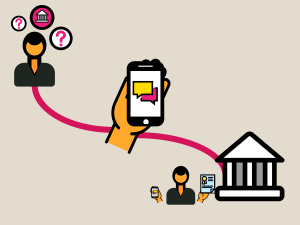
Text Messaging for Justice: We built Wise Messenger to make it easy for courts and legal aid groups to text reminders, hotlines, procedural coaches, and online intake with the public. Read more about our texting work here.

Natural Disaster Legal Help: The Lab built a natural disaster legal help app, Flood Proof, to help people in Louisiana to clear titles to their homes so they could get disaster relief and find legal help.
Explore the Legal Innovations our Lab is working on
Legal Help Commons
The Legal Help Commons is shared infrastructure for the access to justice sector. Legal aid organizations, courts, and technology partners across the country are working together to define what legal help AI should do, how to test it, and what quality standards it should meet.
JusticeBench
JusticeBench is an initiative by the Stanford Legal Design Lab to help researchers, technologists, and public service leaders evaluate and build better AI systems for civil legal help.
Justice AI Co-pilots
With courts and legal aid partners, and with our students, we build and test AI co-pilots for specific legal help workflows. We are partnering with the Legal Aid Foundation of Los Angeles (LAFLA) on eviction matters and Legal Aid Services of Oklahoma (LASO) on reentry debt.
AI+A2J Initiative
What are the opportunities and risks for AI in the justice system?
In our AI and Access to Justice initiative, our Lab is conducting user research, AI evaluation, and project development to advance responsible AI that can help the public with legal problems.
We have a Law/Design class called AI for Legal Help, taught yearly since 2023, in which students partner with public interest organizations like the Legal Services Corporation, American Bar Association, LA Courts, and legal aid groups around the country. Students learn how to evaluate, design, and build new AI solutions.

Access to Justice Network
Our Lab hosts and stewards the Access to Justice Network, a community of more than 1,300 judges, court managers, attorneys, librarians, researchers, and technologists. It is open to justice professionals worldwide, as well as professionals who work with them to make effective, innovative, and well-designed justice systems.
Join the Access to Justice Network by applying here.
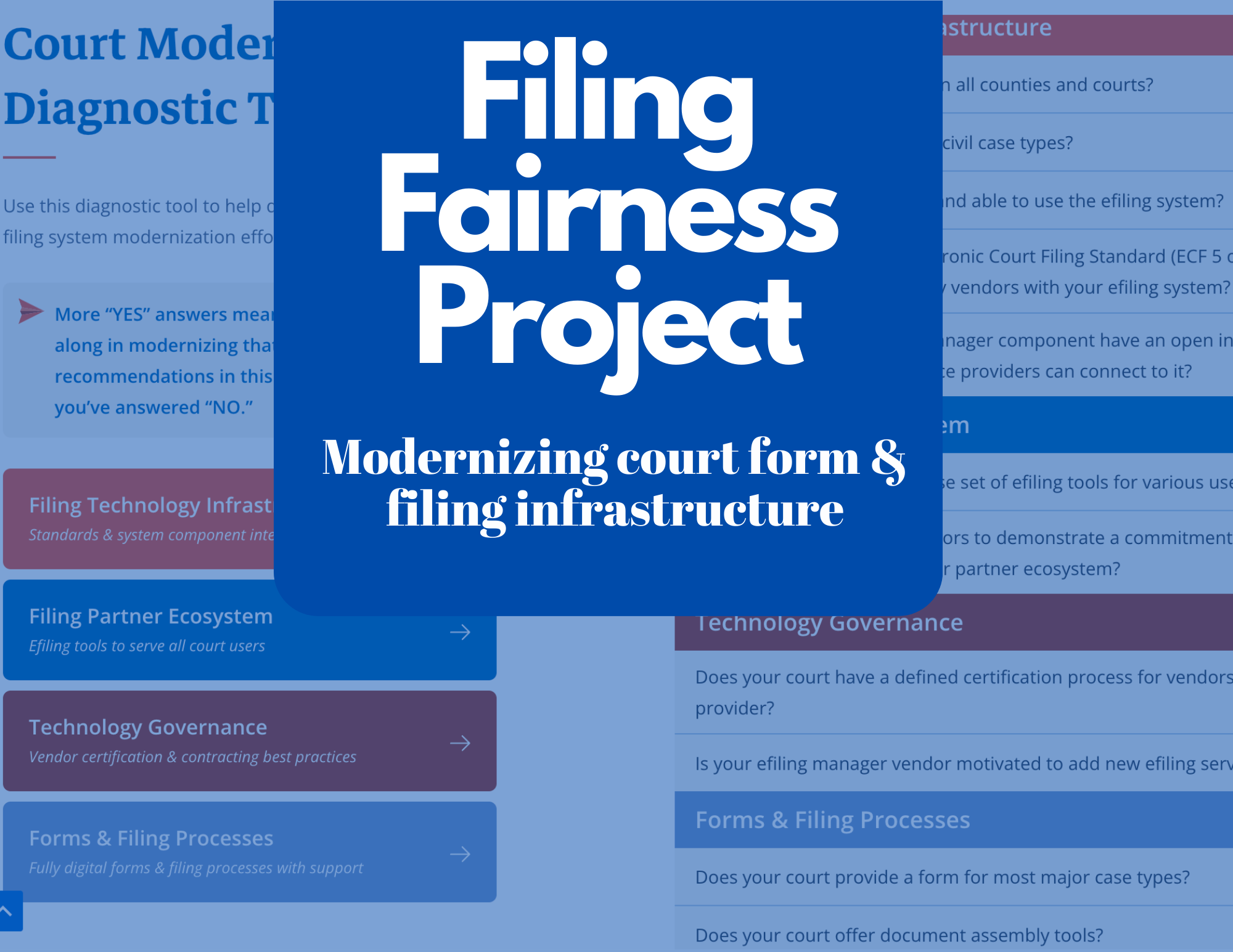
Filing Fairness Project
When a person is sued for an eviction or debt, when they need to file a restraining order, or they need to figure out child support, they need to find, fill out, and file court forms.
The Filing Fairness Project is modernizing the court user’s form and efiling journey through an ambitious multi-jurisdiction cohort.

Eviction Legal Help FAQs platform
In Spring 2020, we built a national Legal Help FAQ platform, with 50-state coverage, of renters’ rights and protections during the COVID-19 emergency.
Our team did extensive legal research and assembled a national network of housing law experts to be able to present, in plain language, if renters could be evicted, how much time they had to pay rent, and what new protections they might have in court. It also has a national database of local legal aid groups, court self-help sites, emergency rental programs, and other services that we could connect renters to in each state.
We designed the site to be expandable in coming months, to include more guides and FAQs on how a renter can navigate the eviction process and raise defenses to protect themselves. This site is unique in providing national coverage and detailed legal information for renters.
The Legal Help FAQ platform was built with the support of The Pew Charitable Trusts.
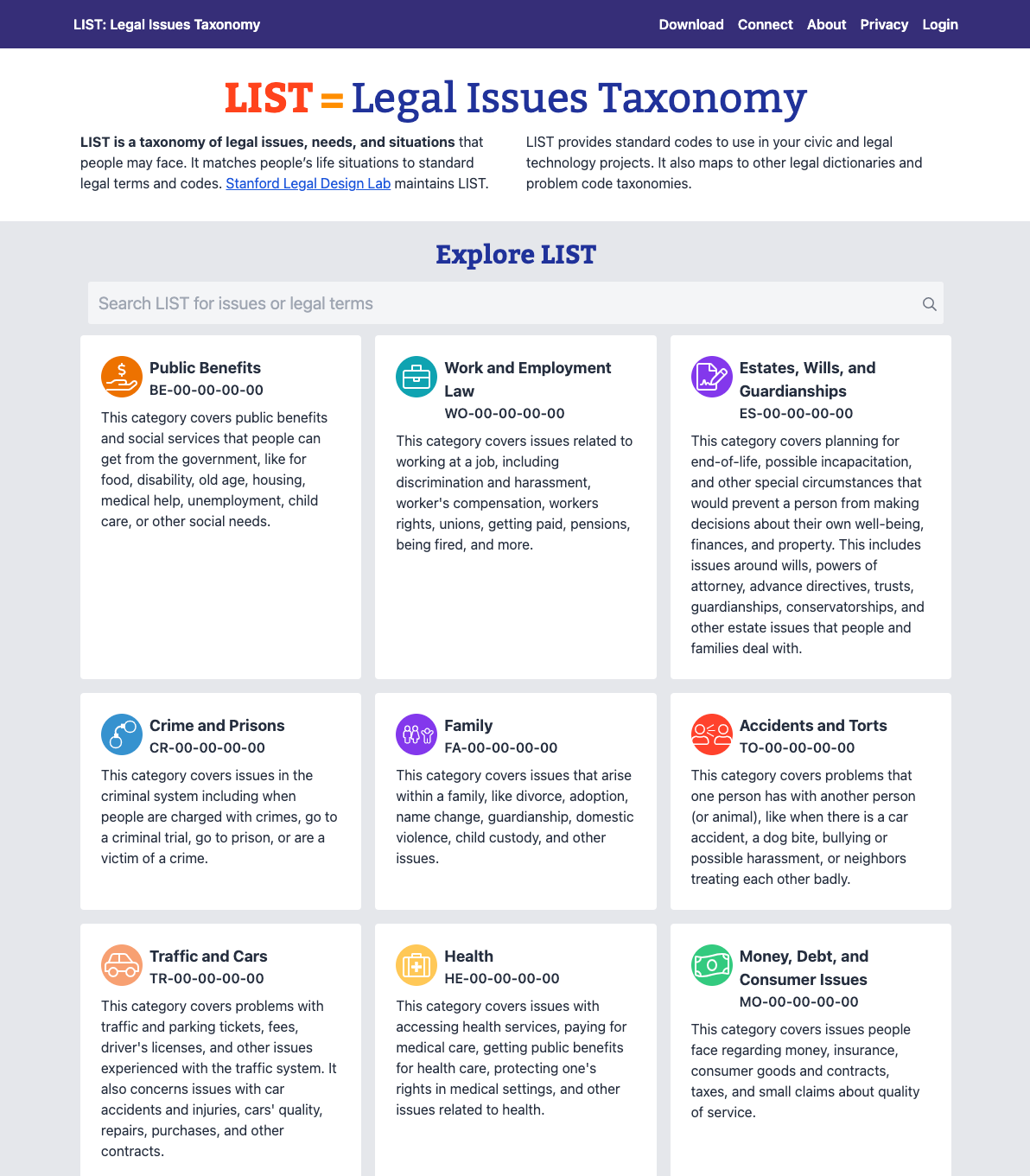
LIST: Legal issues taxonomy
Our team has been building LIST, a user-centered taxonomy of legal problems that people might have in the U.S. It’s called LIST, the Legal Issues Taxonomy, (formerly National Subject Matter Index version 2), since it is an iteration of a taxonomy originally developed by legal aid technologists fifteen years ago.
This taxonomy is an essential tool for classifying people’s issues and the legal help resources available to them online. The taxonomy provides standard problem codes, definitions, and examples of the legal scenarios that people might find themselves in.
It is useful for app and bot developers, machine learning projects, legal needs analysis, legal help webmasters, and others who are interested in building more interoperable, AI-powered legal tools.
Read more about how you can use it here at our article on LIST use cases and deployment.

Learned Hands
Learned Hands is a machine learning project to use interactive games to build tools that can automatically spot people’s legal issues. We built this game for law students and lawyers to play, by reading people’s legal stories from Reddit and elsewhere, and then labelling the stories with standard legal issue labels.
With this labeled data, we can then train machine learning models to automatically spot people’s issues and potentially connect them with resources, find patterns of needs, and integrate more AI into access to justice tools.
As more people play Learned Hands, it contributes to the SPOT classifier, which can then be used by our bots and other groups’ tools to spot people’s legal issues in their posts and tweets.
The goal is to be able to help people find the local, public interest help — even if they don’t know that their problem around debt, family, housing, work, or traffic actually has a legal solution.
Learned Hands was built with Suffolk LIT Lab and the support of the Pew Charitable Trusts.
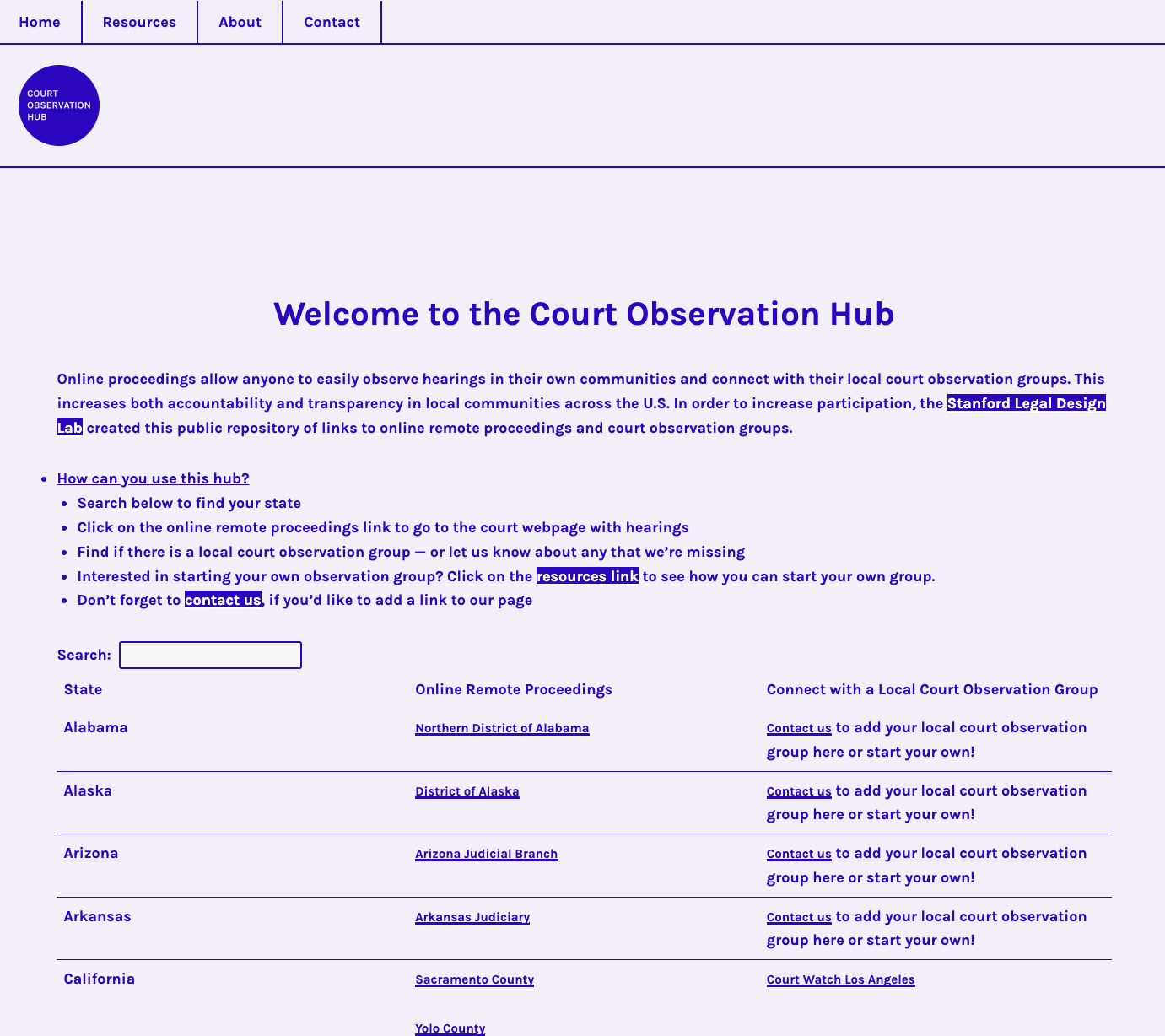
Court Observation Hub
Our team has built a central tool for teams to observe online courts. The Court Observation Hub has a master list of online court links, and groups that already do court watching.
Do you want to start a Court Watch program?
Do you want to find the programs that already exist in different jurisdictions?
The Court Observation Hub has the links and resources to help you do virtual court watching.
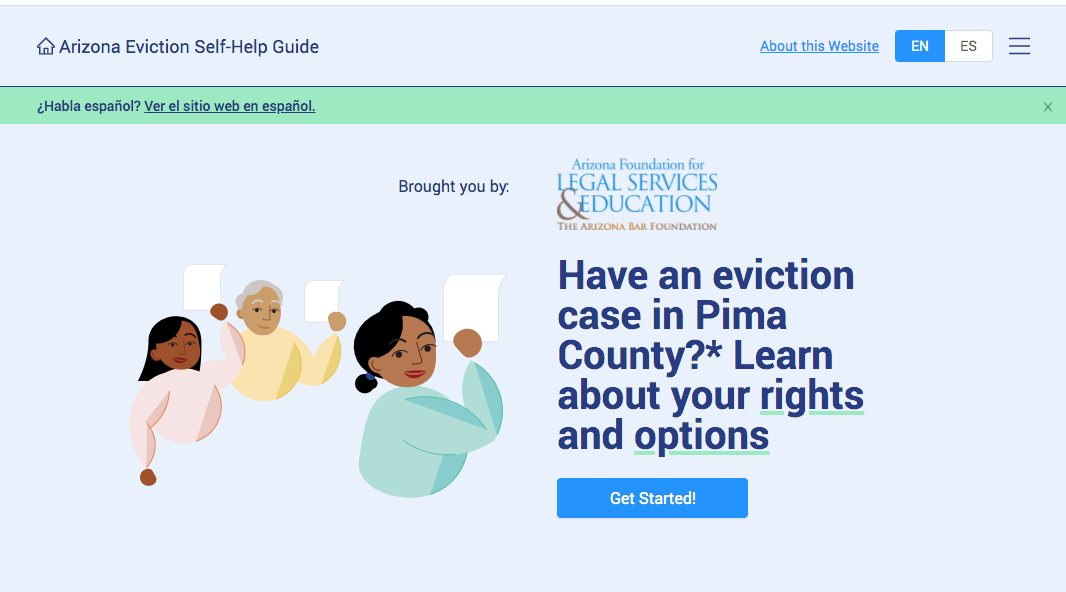
Our team, working with university, court, and foundation partners in Arizona, built the Arizona Eviction Self-Help website for tenants in Pima County to understand their rights, prepare documents, and get court hearing information for their upcoming eviction hearing.
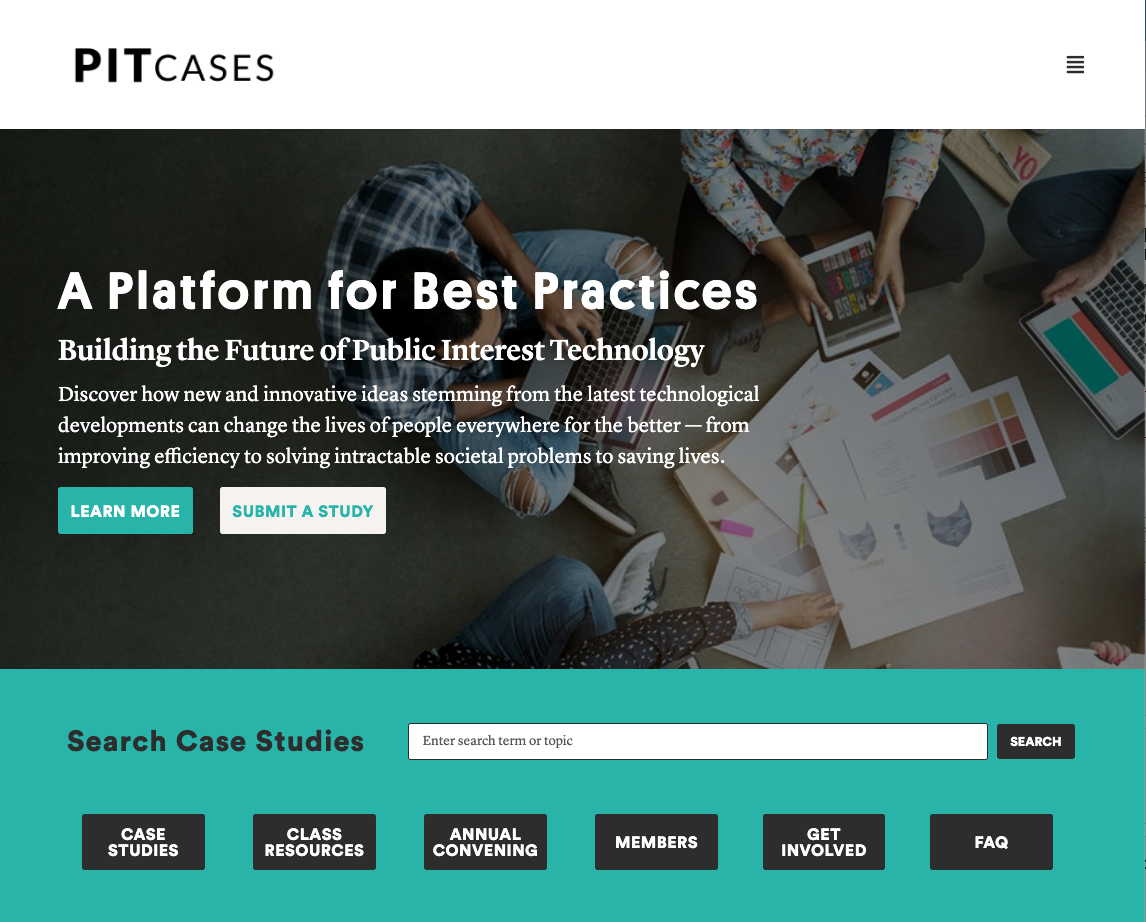
Our team helped build a Public Interest Technology case study platform with the PIT-UN network, Georgetown, Howard, and New America. We also have work on legal regulatory sandboxes in Utah and elsewhere.

Navocado is a web platform to create and publish better guides to legal processes, with visual and interactive step-by-step triage and process guides.

We create Court Visual Guides, which are print and digital visual guides to complex legal processes, that explain how a person can navigate systems like traffic court or eviction lawsuits.
Our Latest Posts
Read our latest long-form essays and reports on our Medium publication Legal Design and Innovation.
We post our team’s work and reports here, as well as guest essays from professors, designers, technologists, students, and others working on legal design efforts.
If you’re interested in contributing a piece to Legal Design & Innovation, please be in touch!

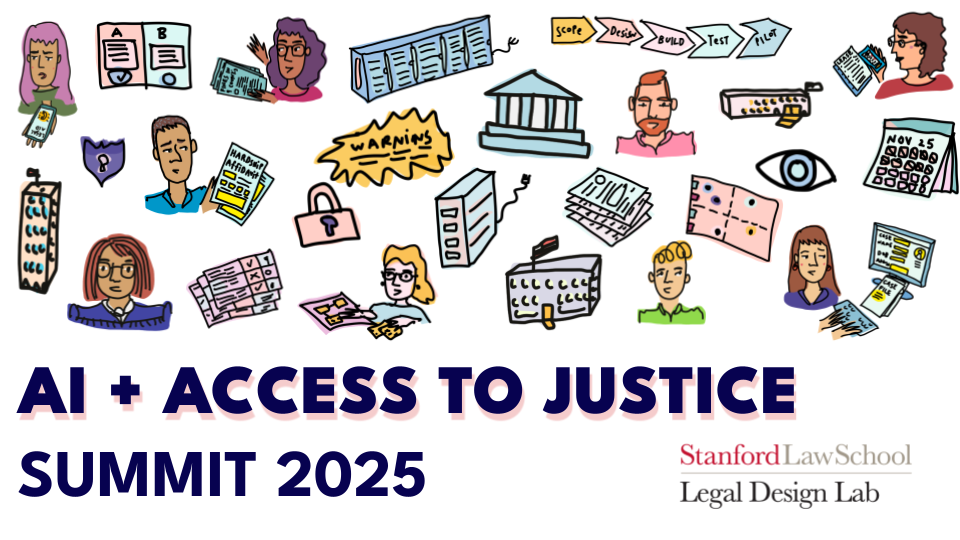
AI + A2J Summit 2025
The Stanford Legal Design Lab hosted the second annual AI and Access to Justice Summit on November 20-21, 2025. Over 150 legal professionals, technologists, regulators, strategists, and funders came together to tackle one big question: how can we build a strong, sustainable national/international AI and Access to Justice Ecosystem? We will be synthesizing all of…
Access to Justice Network
The Legal Design Lab is thrilled to be the home of the new Access to Justice Network, the successor organization to the Self-Represented Litigation Network. What is the Access to Justice Network? The Access to Justice Network (A2J Network) is a community of judges, court managers, attorneys, librarians, researchers, technologists, and community leaders dedicated to…
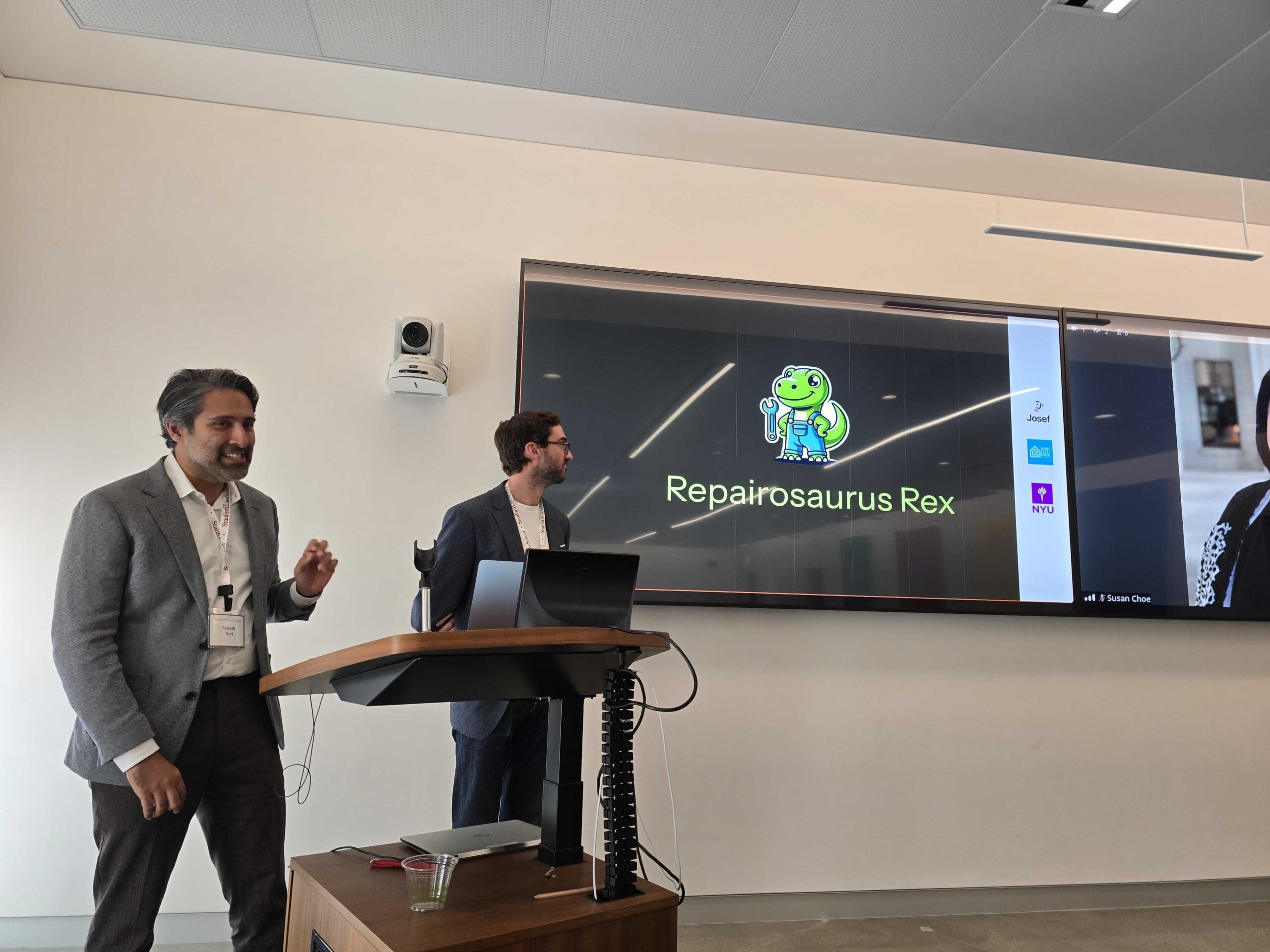
AI + Access to Justice Summit at Stanford
On October 17 and 18, 2024 Stanford Legal Design Lab hosted the first-ever AI and Access to Justice Summit. The Summit’s primary goal was to build strong relationships and a national, coordinated roadmap of how AI can responsibly be deployed and held accountable to close the justice gap. AI + A2J Summit at Stanford Law…
AI and A2J webinar series: Hannes Westermann — The Hammer and the Carpenter
By Nóra Al Haider When you explore the online legal community space, you’ll notice that the topic of AI and Access to Justice (A2J) comes up quite frequently. Most agree that AI & A2J is a consequential topic. However, even though the importance of the topic is recognized, the phrase itself remains nebulous. What do…
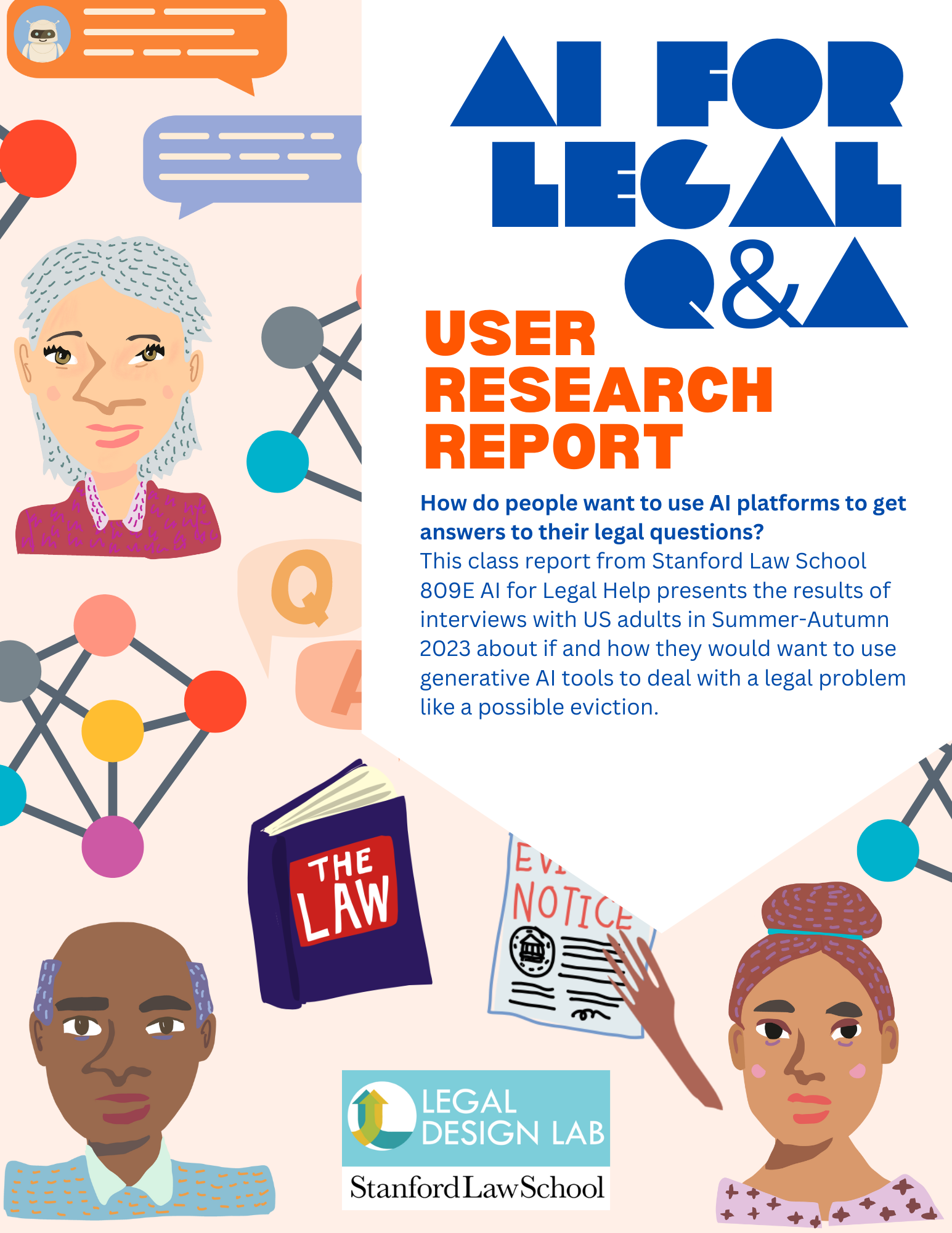
User Research Report on AI for Legal Q&A
A report from the students in the Autumn 2023 Stanford Law/d.school class “AI for Legal Help”, 809E. Please explore this January 2024 report from the Stanford policy lab/design lab class “AI for Legal Help.” The students interviewed adults in the US about their possible use of AI to address legal problems. The students’ analysis of…
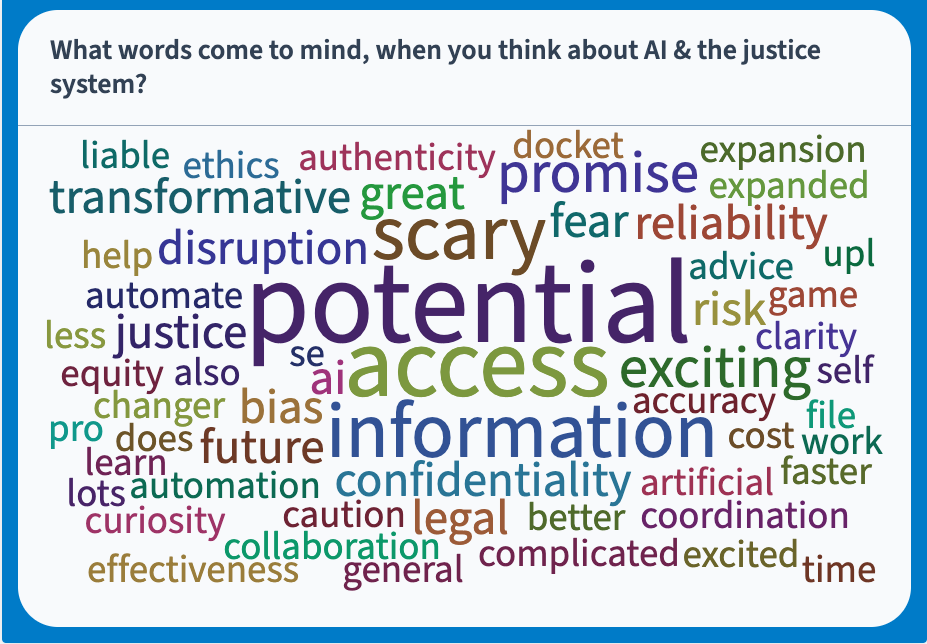
Bringing an AI & Access to Justice Community Together
What we learned about at the LSC-ITC conference of civil justice professionals, about the state of AI & A2J Last week, our team at the Legal Design Lab presented at the Legal Services Corporation Innovations in Technology Conference on several topics: how to build better legal help websites, how to improve e-filing and forms in state…
AI & Legal Help Crossover event
What can justice professionals be working on, to make stronger relationships with technologists researching & developing AI platforms? How can legal and computer scientists collaborate for human-centered, effective AI for access to justice?
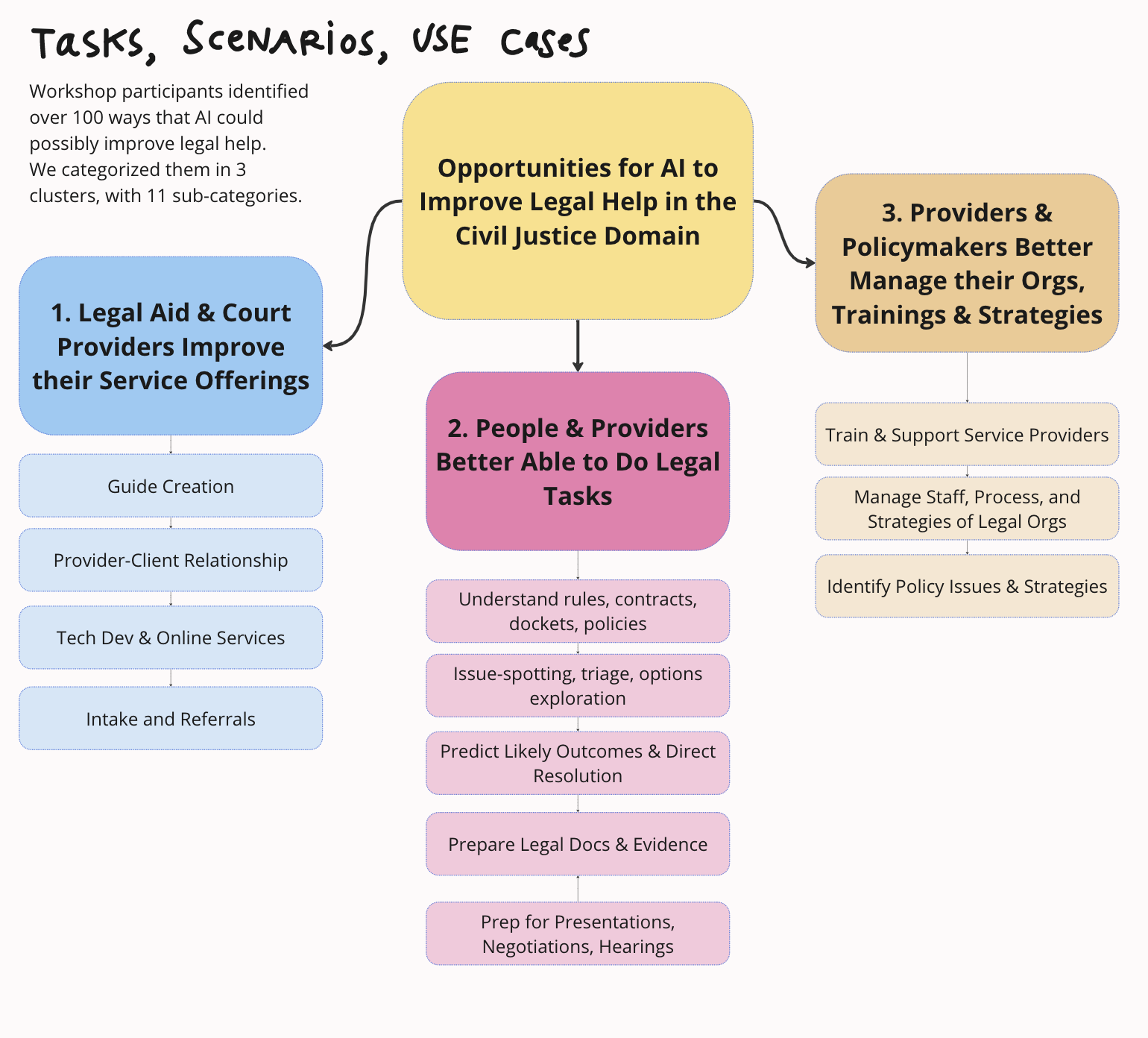
AI & Access to Justice: Opportunities, Risks, and Next Steps workshop
As more lawyers, court staff, and justice system professionals learn about the new wave of generative AI, there’s increasing discussion about how AI models & applications might help close the justice gap for people struggling with legal problems. Could AI tools like ChatGPT, Bing Chat, and Google Bard help get more people crucial information about…
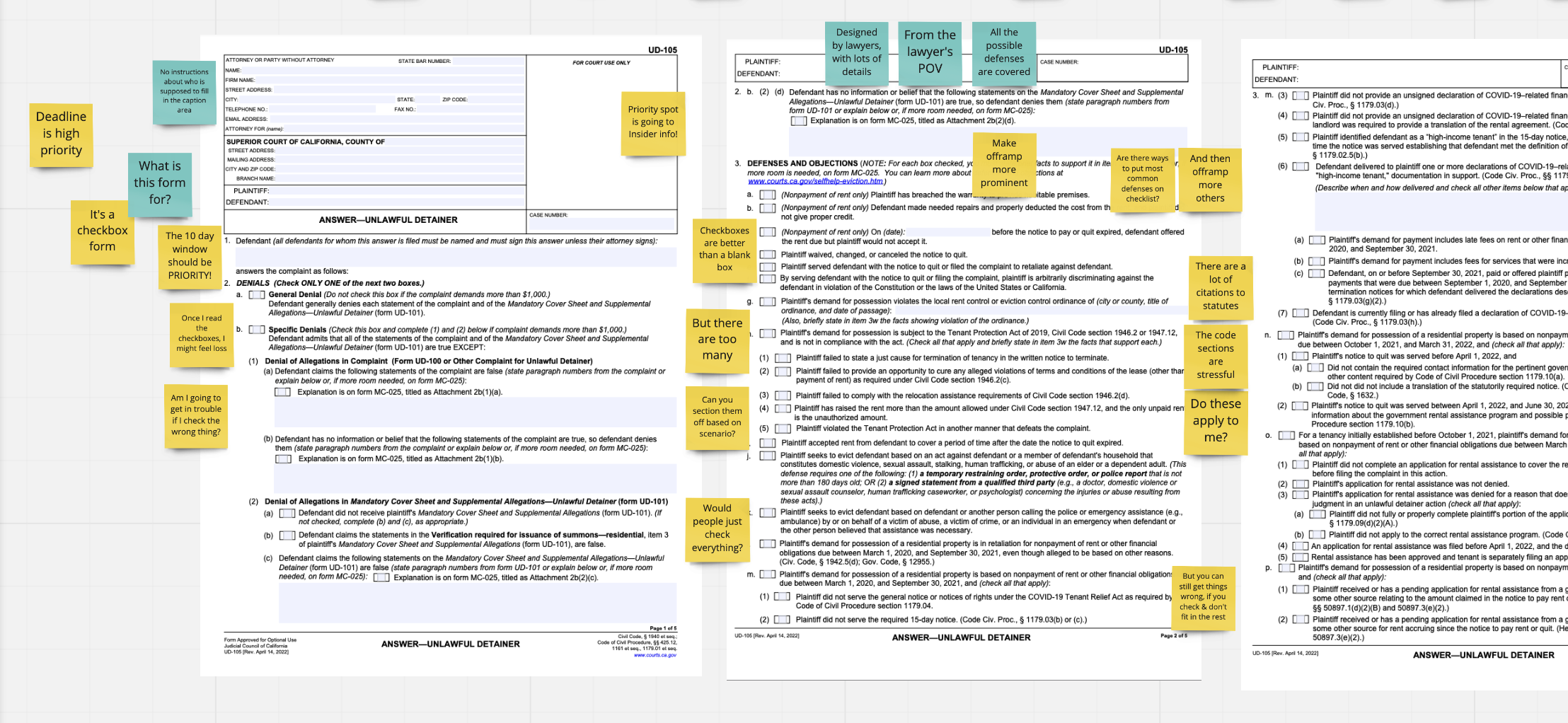
How Do you Design a User-Friendly Court Form?
More court leaders realize that forms are essential to people’s access to the justice system, and want to make these forms more usable, useful, and engaging. But how exactly can courts improve the user-centered design of their official forms?
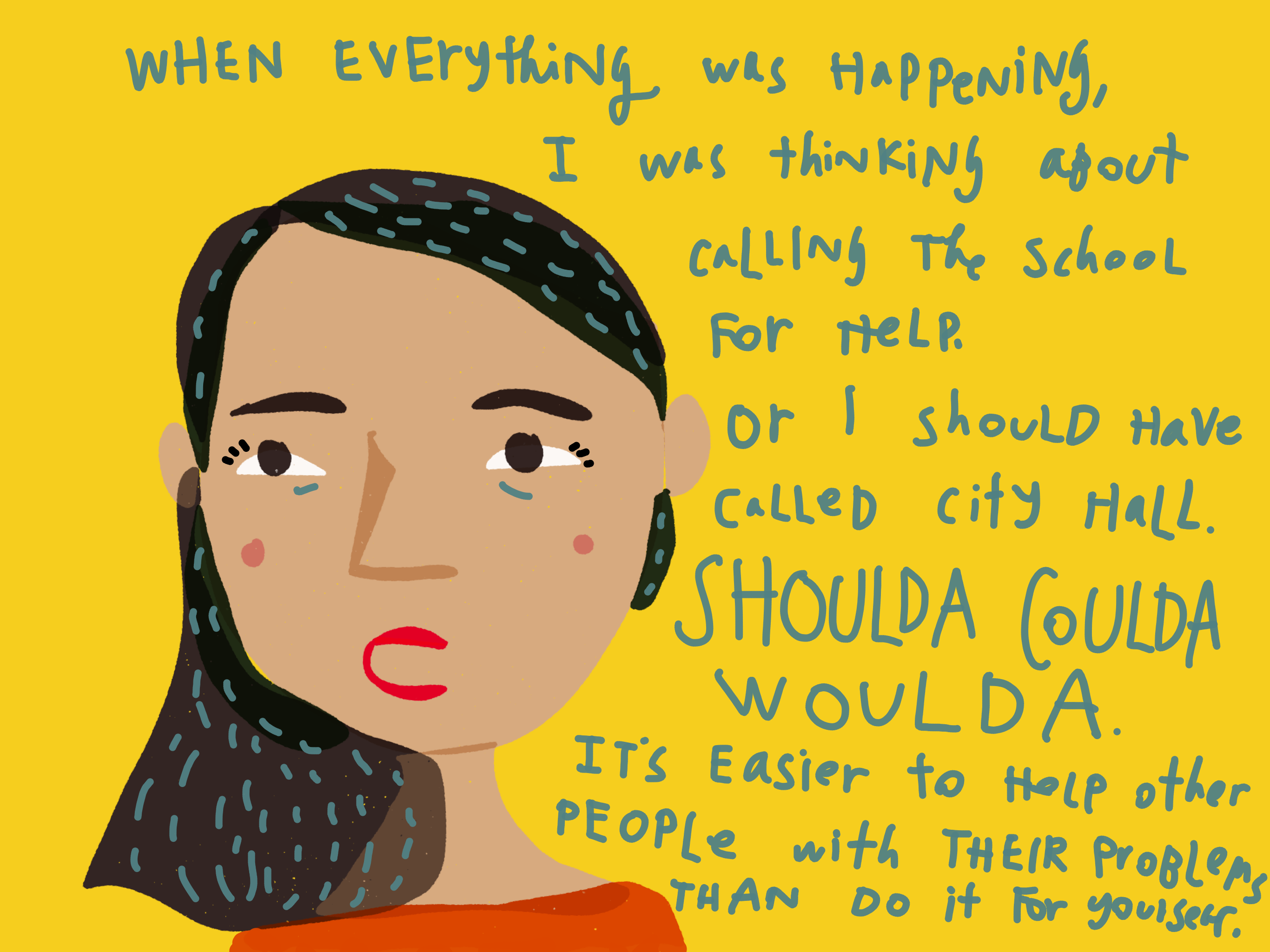
Barriers to Getting Eviction Help: class report
Many of the eviction prevention resources focus on getting people help once a lawsuit is filed against them. Or they are about connecting them with a lawyer to fight back against the eviction. Why aren’t more tenants making use of these services? Our Justice By Design: Eviction class interviewed tenants across the country about their…
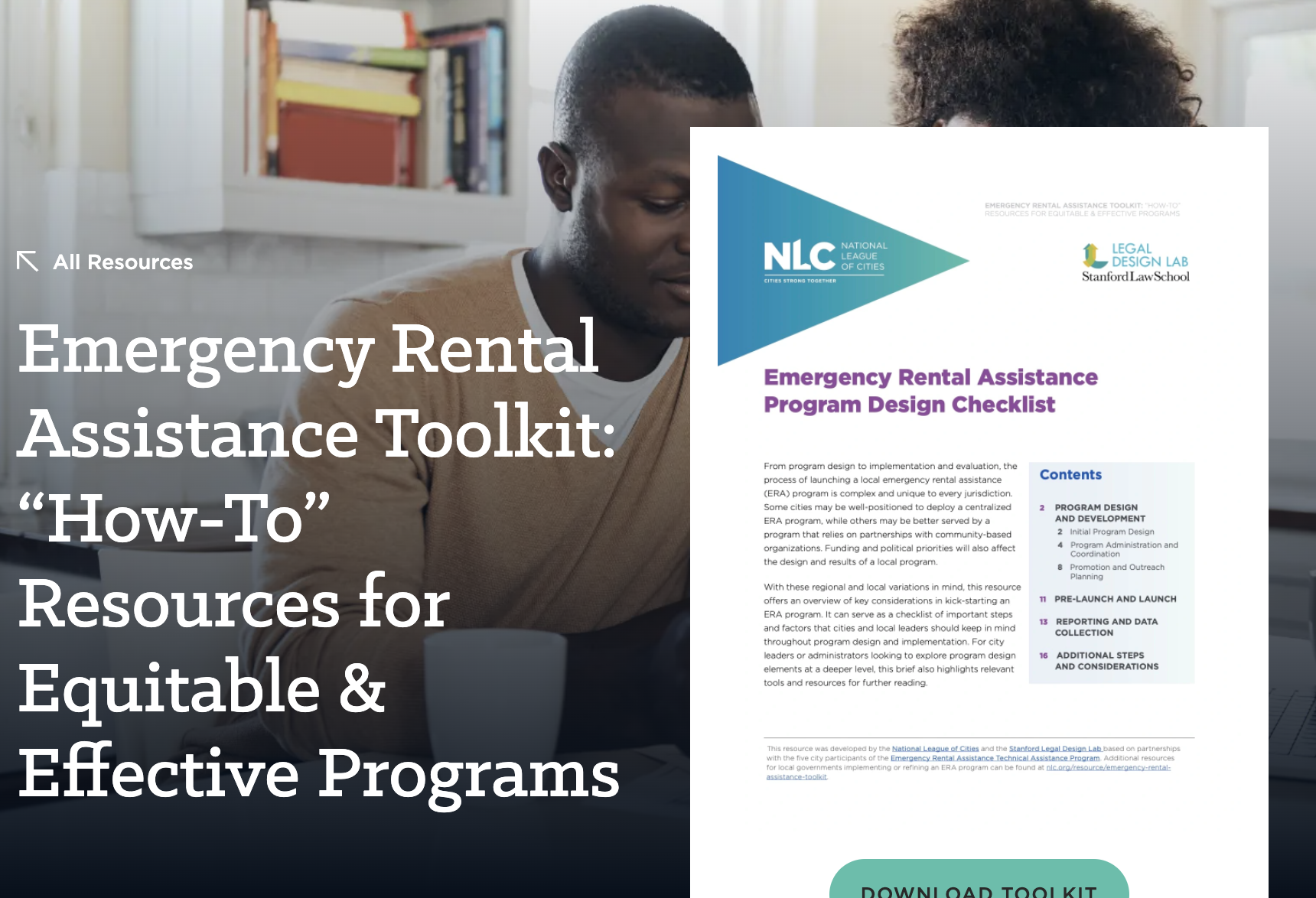
Emergency Rental Assistance Toolkit for local policymakers
How can more city agencies, courts, and nonprofits connect to people at risk of eviction? How can they use rental assistance to stop people from being forced from their homes? Find this toolkit full of practical guidance to use in your region.
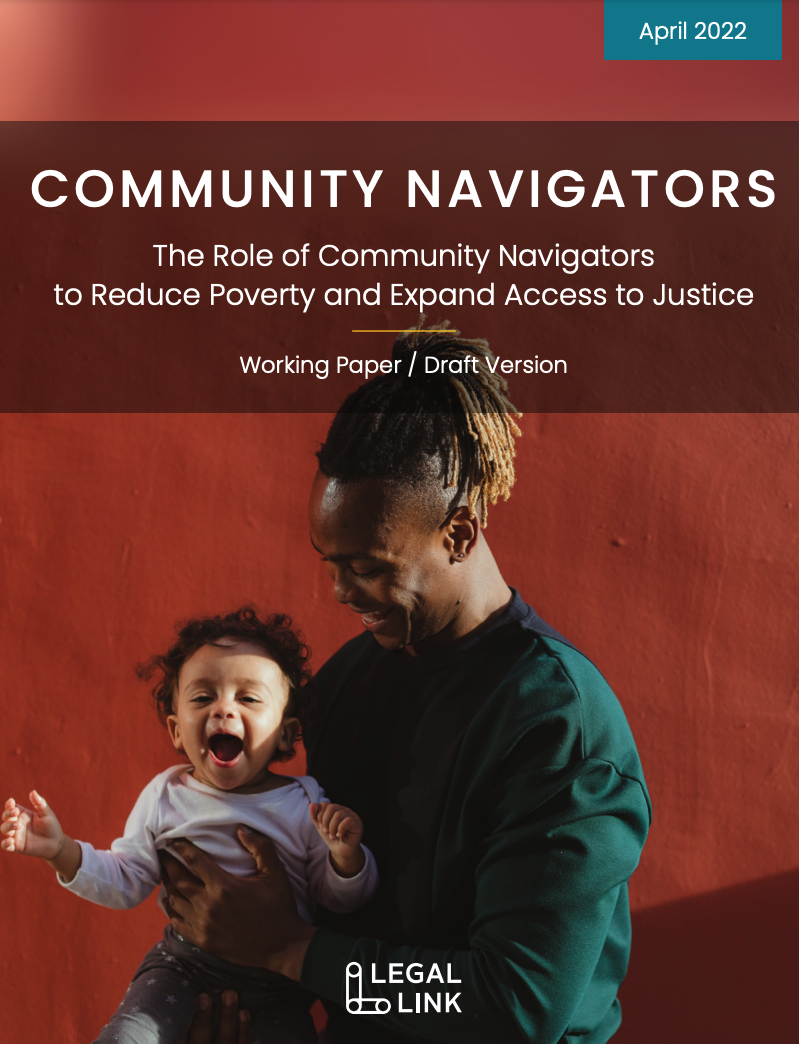
Community Navigators report
This new report from Legal Link and the Lab profiles how community navigators can promote access to justice and reduce poverty by taking a human-centered approach.
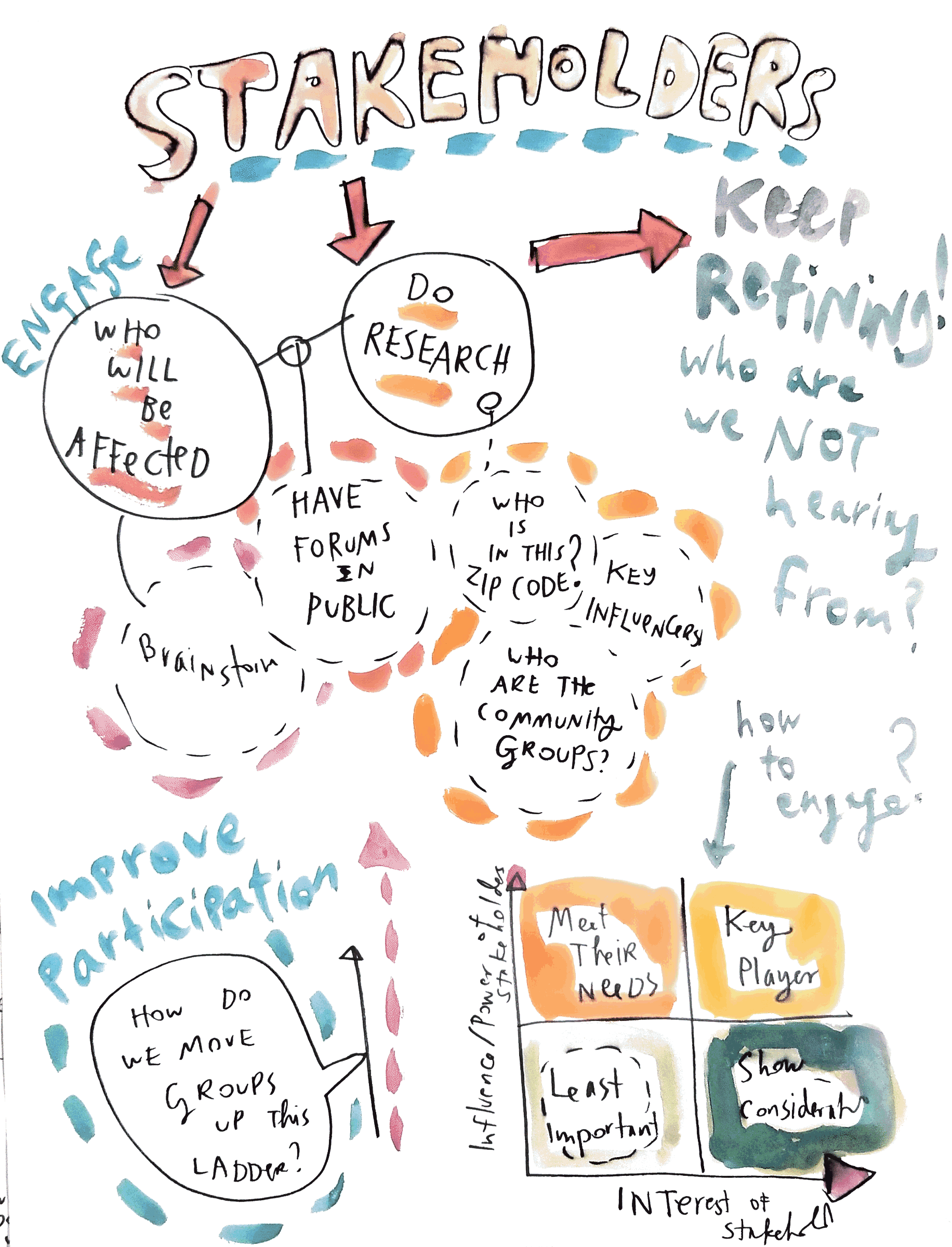
Civic Design class
Our Lab’s Spring 2022 class is a new offering: Civic Design, where we focus on participatory policy-making in local governments, to bring innovative new solutions for better cities.
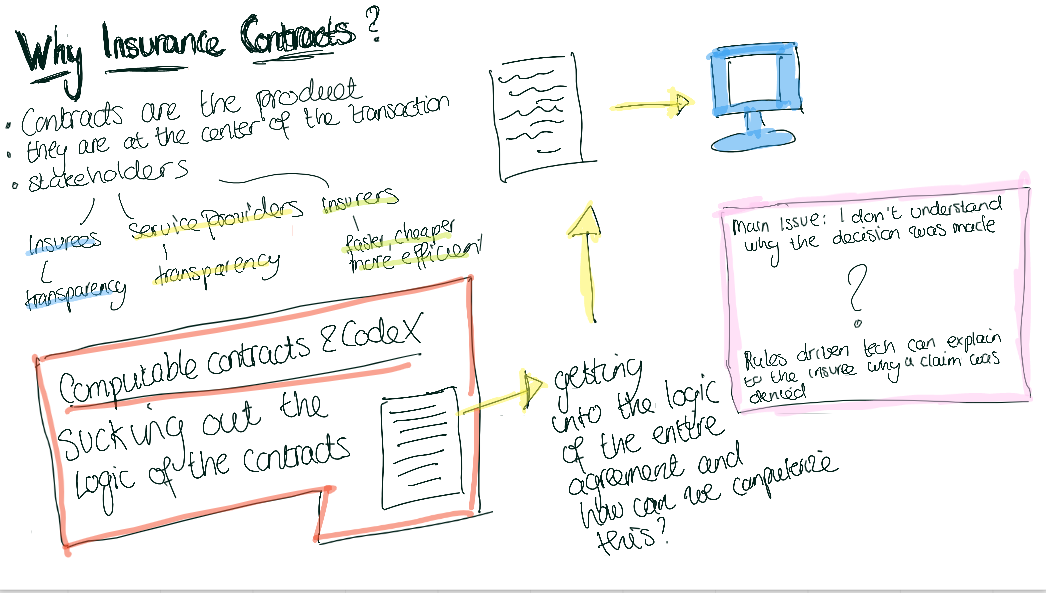
There Has to Be a Better Way Than This: New directions for insurance contracts
How could computable contracts improve people’s health insurance contracting? by Nora al-Haider, Luz Daniel, Shobha Dasari, Margaret Hagan, Arianne Marcellin-Little, Alistair Murray, Michael Perlmutter, Roland Vogl, and Annie Zhu This piece was originally published at our Legal Design & Innovation medium publication. Table of ContentsKey Opportunities for Human-Centered Computable Contracts“Let Me Know What You Know”:…

Human Centered Computable Contracts class
In Winter Quarter, our Lab Team is working with the CodeX team, to co-teach a new class at Stanford Law School. It is a hands-on, project-based class, about how to make insurance contracts more accessible, intelligent, and human centered. It builds on our past classes on user-friendly privacy policies, and contract design labs. The class…
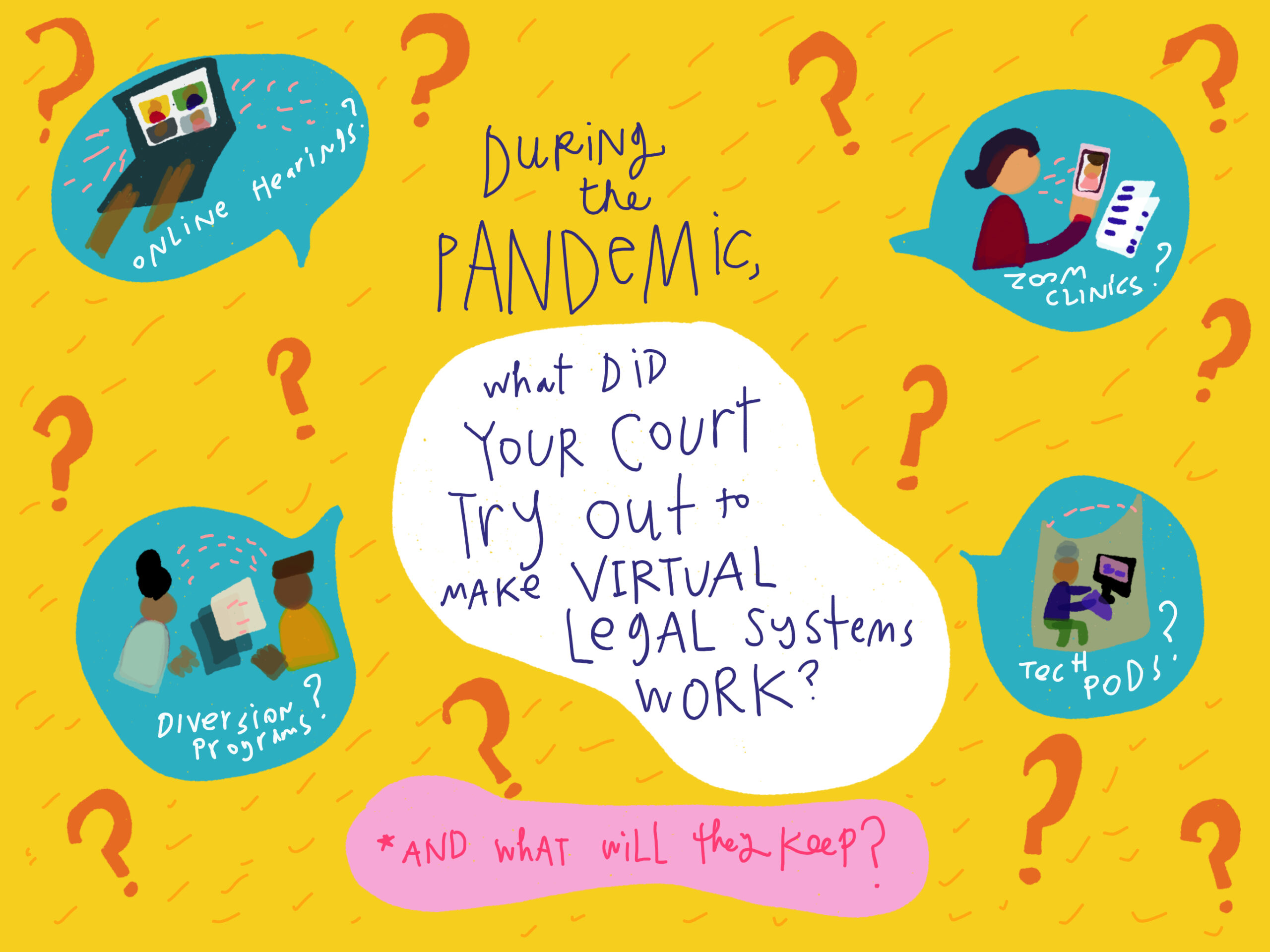
Court survey on virtual legal systems
Do you work at or with a court? Have you been changing tech, process, rules, and help during the pandemic? We’d love to hear from you! Fill out this short form below (or at the link), and we will reach out to schedule an interview. https://docs.google.com/forms/d/e/1FAIpQLScKKWIRnBw4mhGHr9MtHygeFoe4R5jIk80mAhnL8RFUIUFAjg/viewform The Stanford Legal Design Lab is looking to speak with court…
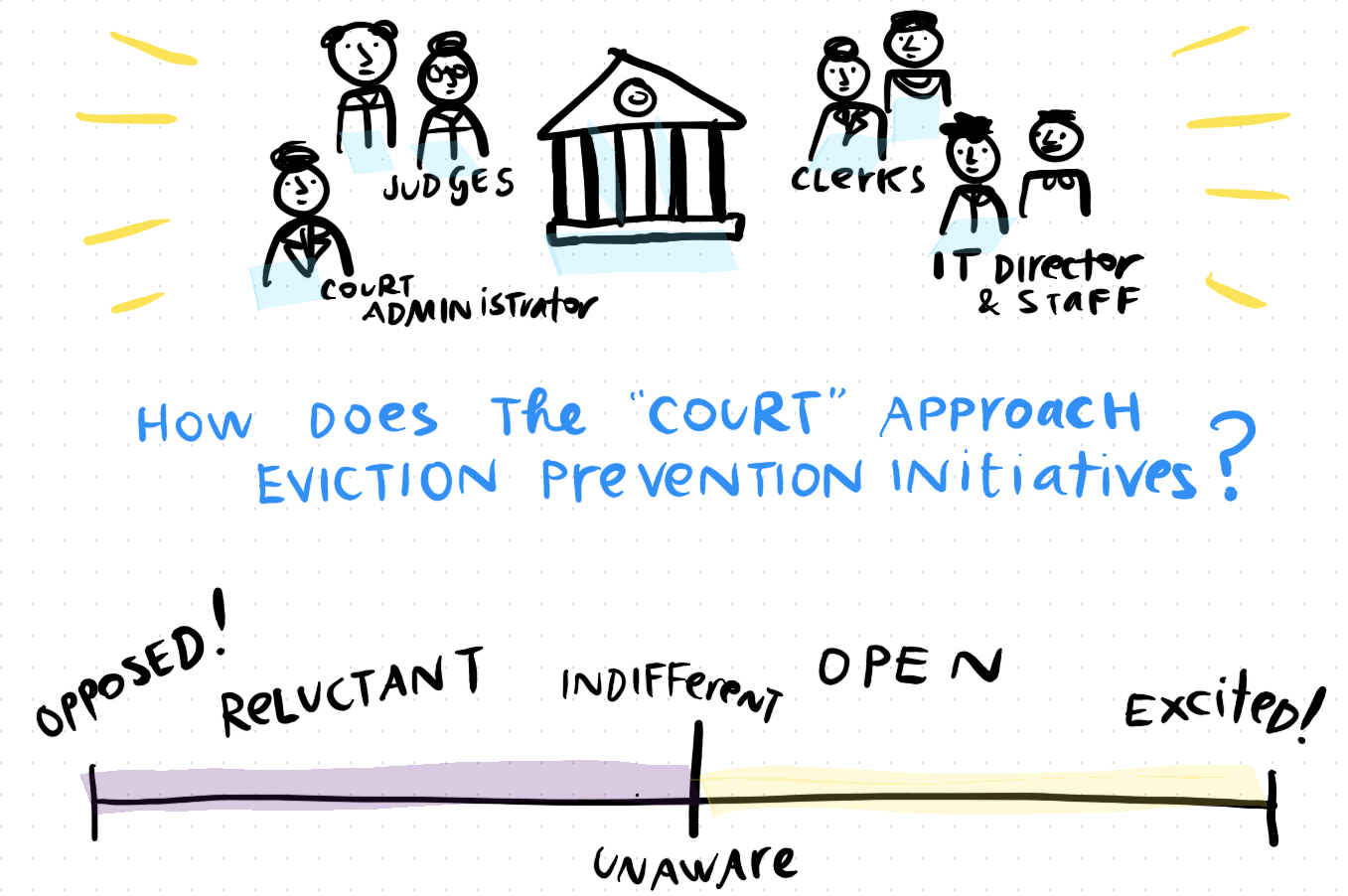
Autumn 2021 Justice By Design: Eviction
In Autumn 2021, the Legal Design Lab will be teaching its newest version of Justice By Design: Eviction, focused on challenges around creating more community legal navigators & court involvement in eviction prevention initatives.
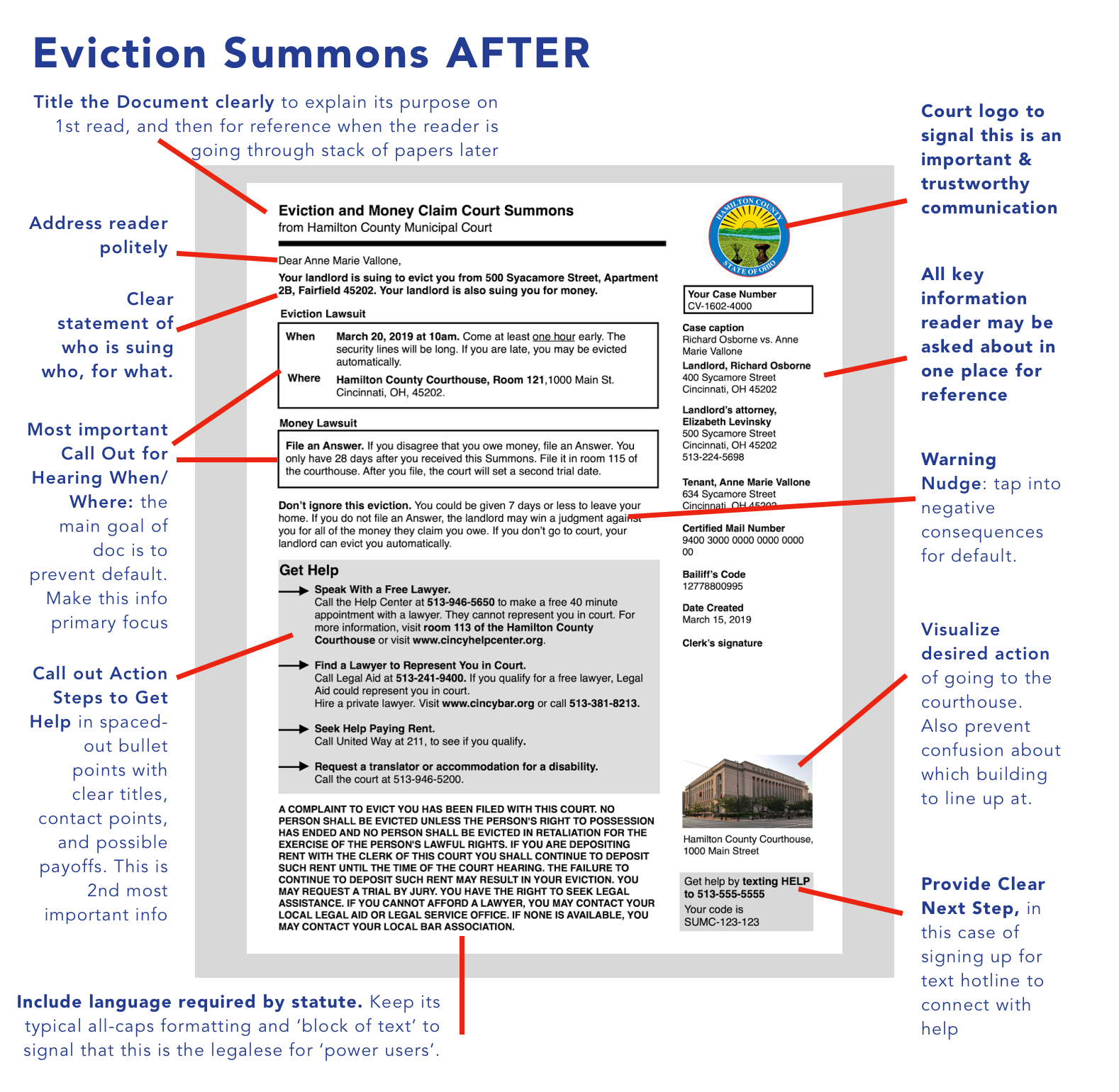
What does a user-centered eviction summons look like?
Find design principles and examples for improving the court document that people get when they are being sued for eviction.
Field Guide on Community-Led Design
This is a Justice By Design field guide for court administrators, judges, and other service-providers to engage more members of the public in innovation work to increase access to justice.
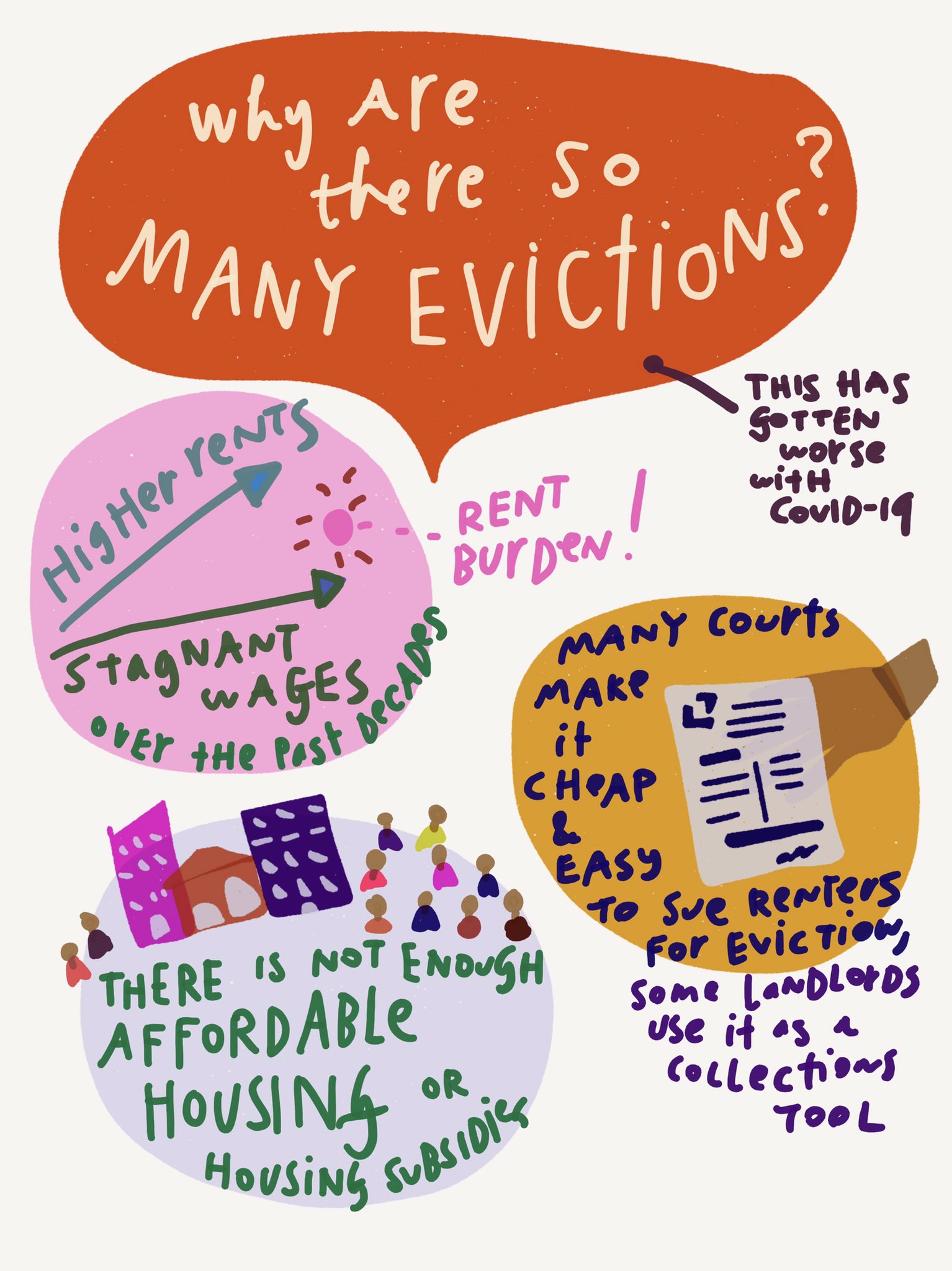
An Equity Lens on Eviction Prevention
The Stanford Legal Design Lab has been collaborating with the National League of Cities to run a 30-city cohort, the Eviction Prevention Learning Lab. We run regular meetings, technical assistance sprints, and peer-learning to spread best practices on eviction prevention. And every quarter we have a big meeting on an issue that many city leaders and communities…
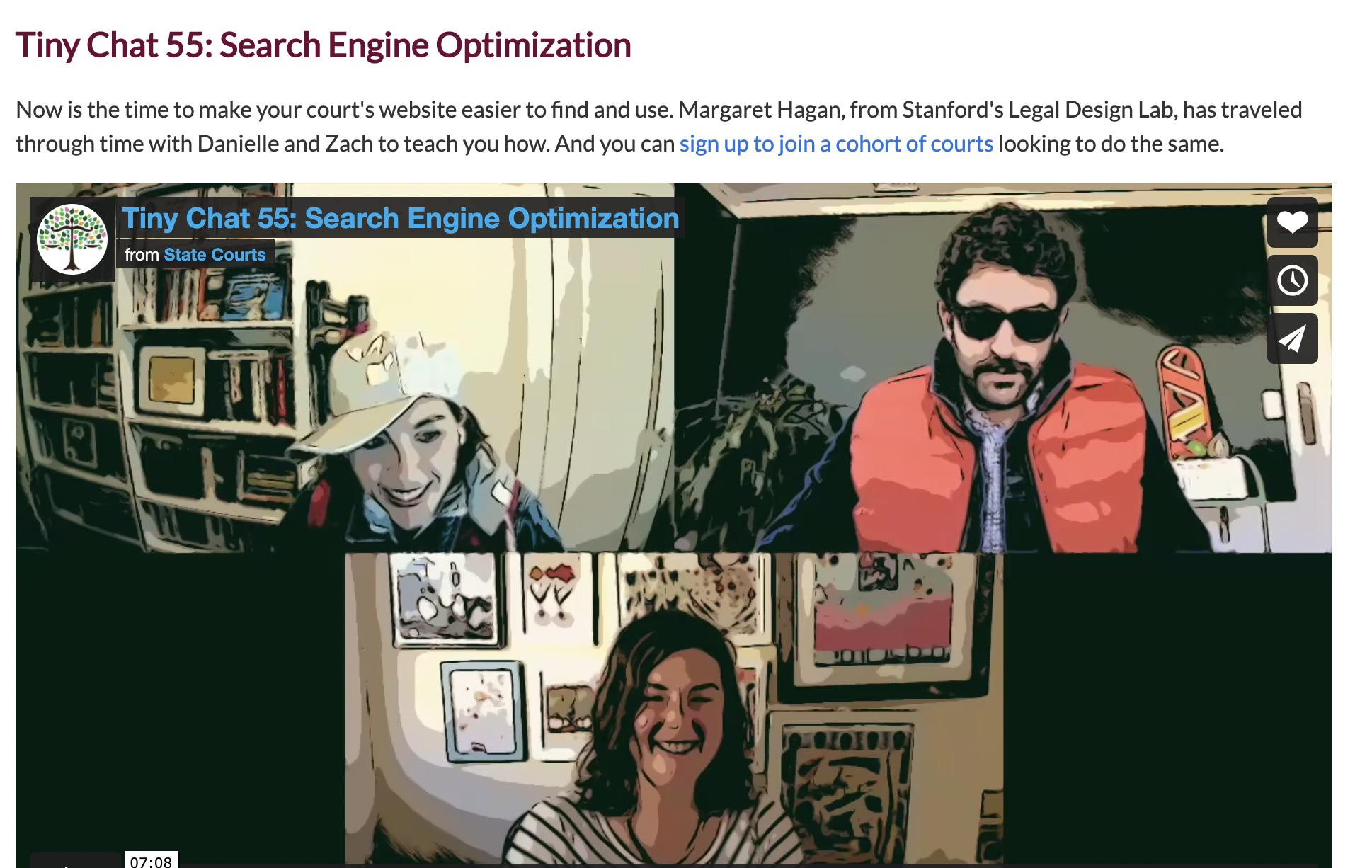
Tiny Chat on Court SEO & Legal Help Online Cohort
The National Center for State Courts hosts great, fun, quick videos on innovations & policy in the state courts. They’re called Tiny Chats, and the latest one is all about Search Engine Optimization (SEO) for public interest legal help websites. I talk to Danielle Hirsch & Zach Zarnow (dressed in their best Marty McFly getups)…

Invitation MIT/Stanford Legal Design Lab: Design Guidelines for Hybrid Courts
Please join us on 5/20 at 1pm ET for the public presentation of the MIT/Stanford Legal Design Lab design studio: Blueprints for Justice. As courts are grappling with designing hybrid court houses that include remote proceedings and virtual services, 8 MIT students have created proposals and guidelines on the future of justice and its physical…
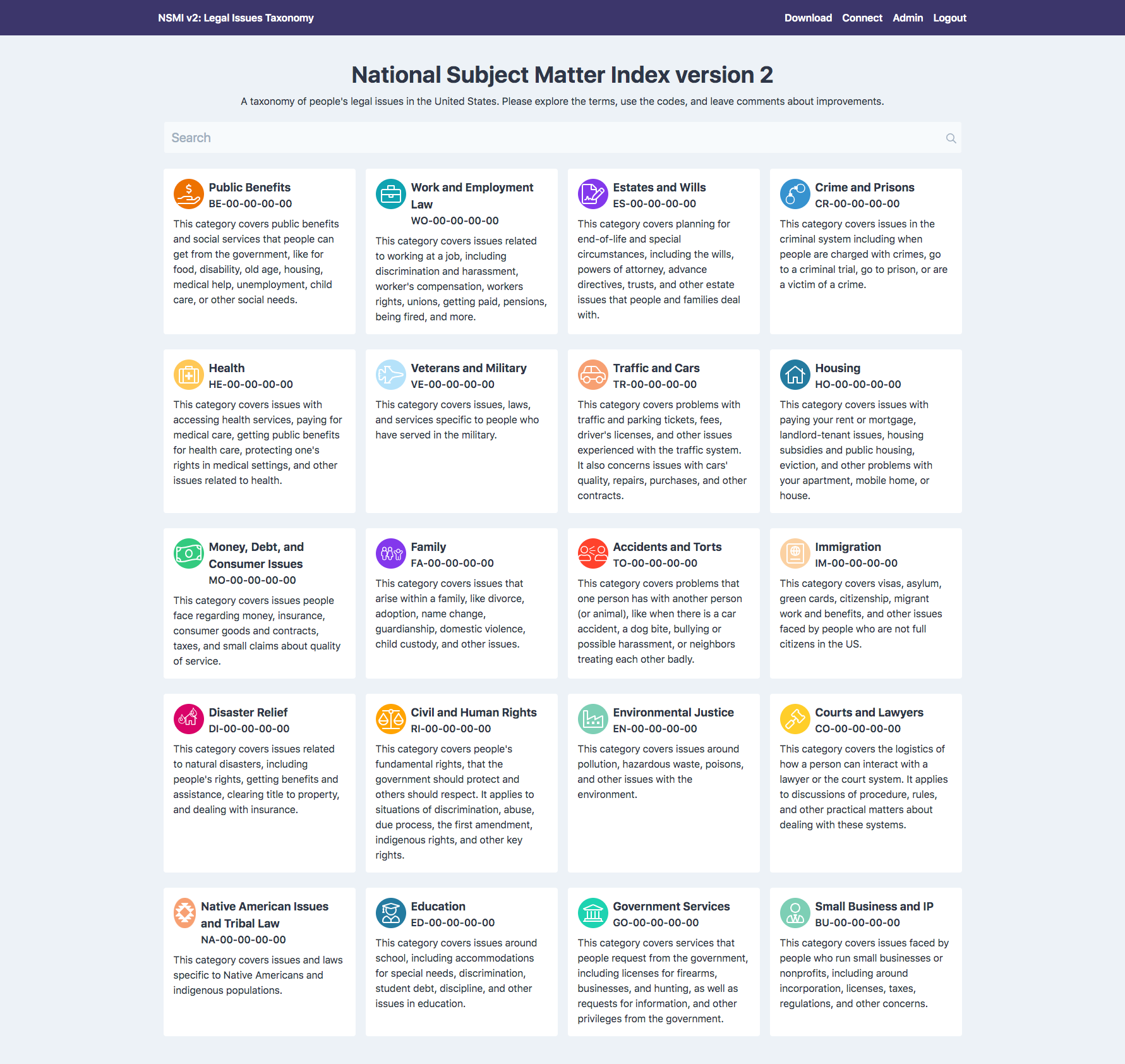
How can I use the LIST taxonomy on my legal tech project?
1. We need standard codes for legal problems. There’s lots of different words we can use to describe the same legal problem. Is this thing an unlawful detainer, an eviction action, a landlord-tenant dispute, or getting kicked out of your house? These words come from legal jargon, different jurisdictions’ terminology, and people’s everyday language around…
Blueprints of Justice
New Blueprints of Justice The Stanford Legal Design Lab is collaborating with Virgil Abloh, MIT Architecture and Oana Stănescu to redesign court houses of the future. Stanford students have the opportunity to join the lectures, roundtable discussions and limited spots are available to motivated students who want to fully participate in the design process. We…
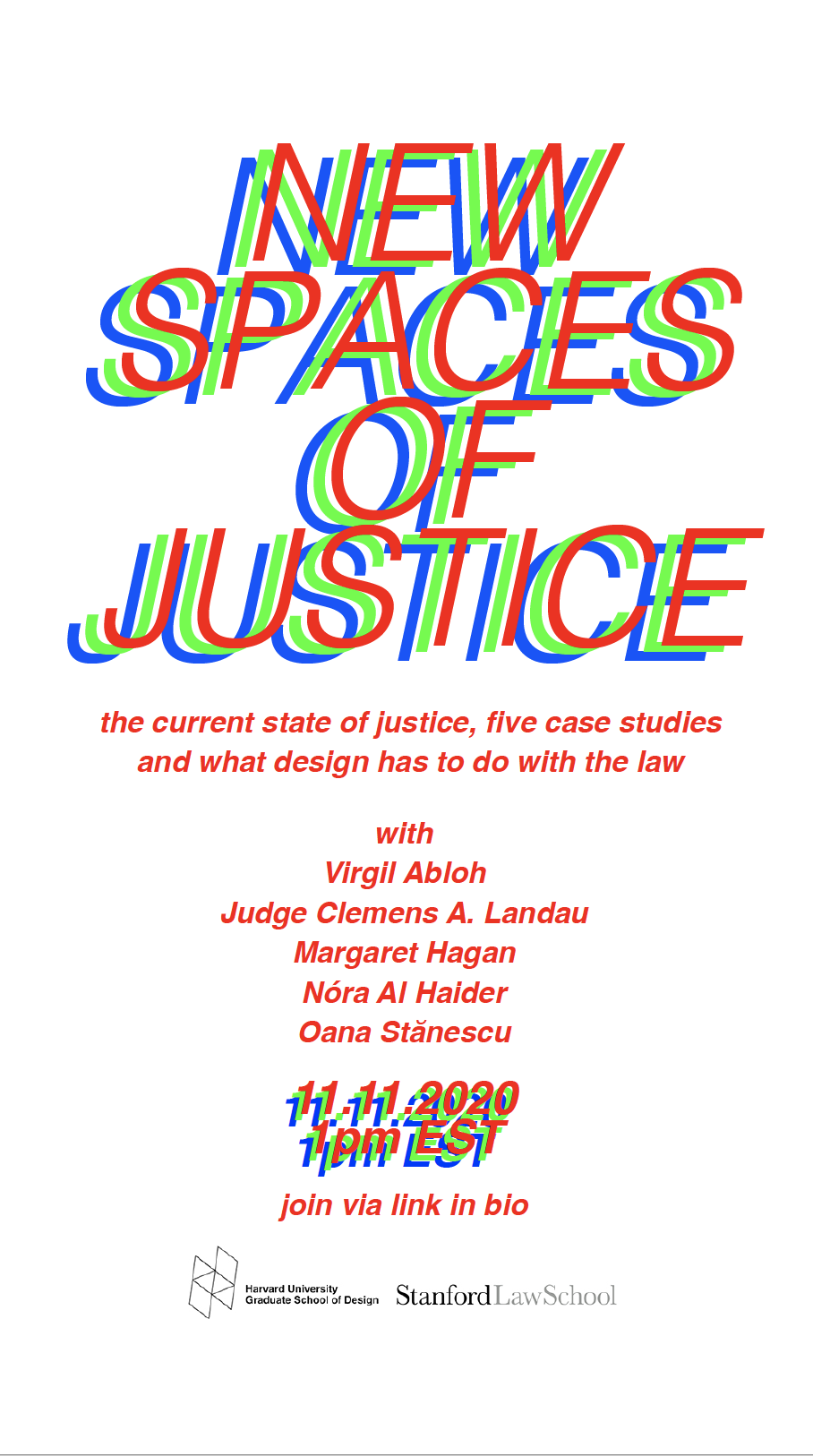
New Spaces of Justice: webinar
The Stanford Legal Design Lab is organizing a public webinar on Wednesday (11/11) at 1pm ET (10am PST) in collaboration with Harvard GSD and Virgil Abloh. These last couple of months, we have been working on designing prototypes for online courts and virtual legal services. During the webinar, we will showcase the prototypes and delve…
Lawgorithms: Poverty Lawyer’s Guide to Algorithms, AI, and smart tech
Here’s a highly recommended report, Poverty Lawgorithms, from Michele Gilman through Data & Society, on how lawyers working on poverty law areas can better advocate for more ethical, human-centered government systems. In particular, as courts, government agencies, and tribunals buy more ‘smart’ technology that automatically sorts people, predicts risks, and makes decisions — how can…

New Spaces of Justice: Workshop Series
Stanford students are invited to register for this unique workshop series organized by Nóra Al Haider (Stanford Legal Design Lab) and Oana Stănescu (Harvard Graduate School of Design) in collaboration with Virgil Abloh. The workbook materials are created by Margaret Hagan. The COVID-19 pandemic has made navigating the judicial system even more challenging since restrictions…
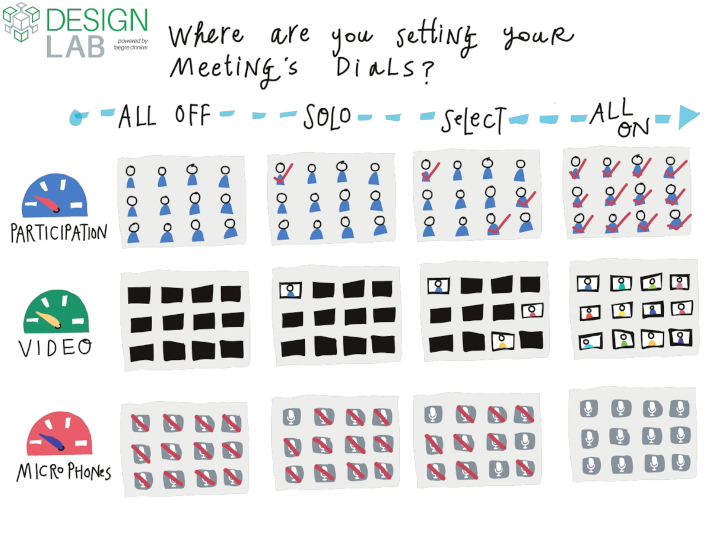
Pop Up Webinar Replay: How to Run a Better Virtual Meeting
After the past months of online work, legal professionals know all the ways that virtual meetings can go wrong: wasted time, audio disasters, low energy, technical confusion, lack of connection — the list goes on. In this one-hour training session, we’ll train you on how to facilitate virtual meetings that are more engaging and effective….
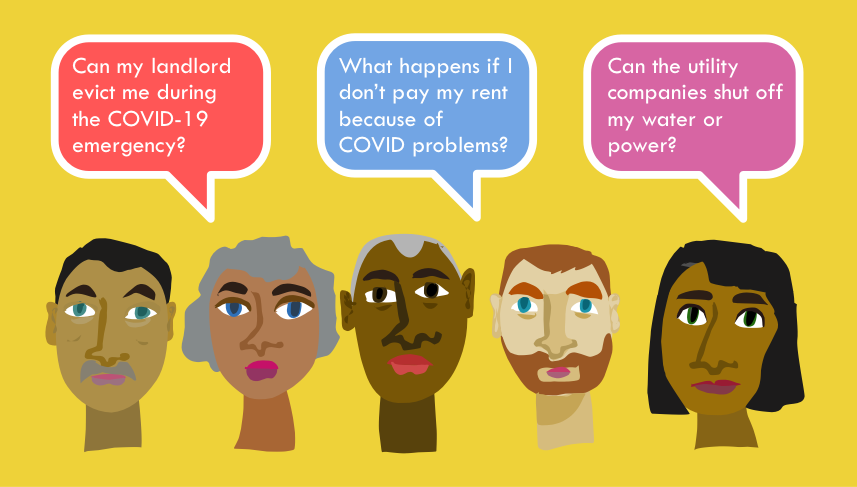
Renters’ rights in every state
Our Legal Help FAQ site has information for residential renters in all 50 US states, about what protections they have during COVID-19 and afterward. This covers rights around being evicted, going to court, paying rent, and getting assistance. It answers key questions that renters have in every state, like: Can I be evicted?What happens if…

Designing better online legal help during an emergency: Legal Help FAQs
Coordinating a national legal help platform for renters during COVID-19 This piece was originally published on our Medium publication Legal Design and Innovation. Since the COVID-19 pandemic hit the US earlier this year, there has been a legal crisis brewing alongside the public health one. The virus and the economic collapse have prompted an escalation of civil justice…
9 Comments
Hello team! Love what you are doing in the design space to make the law more accessible. Can you tell me about future events or course you have coming up? I would love to get involved 🙂
Do you have materials (or can you recommend any) on use of design principles in legal memos and briefs to be submitted to courts?
I’d appreciate any recommendations.
Thanks much!
LOVE THIS! Would like to stay up-to-date on your work.
I am now doing my research for my Governance Innovation Report for the graduate studies at the Ateneo de Manila University- Philippines, I chose to include design thinking/ human-centered approach as one of my frameworks. I am interested in joining your workshop/seminar (public or private) since it will be a great help in my profession as a legal aid advocate. I am looking forward to help more indigent clients, promote a more accessible justice system to all, and improve the legal aid services in our province. Please be an instrument of change through design thinking. Thank you.
My name is Valentina Osorio a law student from URosario in Colombia. I just finished my bachelor degree and waiting for the graduation. I learn about design thinking on a formation program in Accenture and I though that Design Thinking and legal was just like a utopia but now I know that is something real.
Thank you for all the books and content about Legal Design Thinking because I’m trying to figuring out what i want to do in my professional future.
Hi,my name is Lelisa. I am from Ethiopia. I had took my first degree in law at one of the governmental University(Haramaya University).please provide me opportunity to learn your school!
Hi there. I am interested in the Training you offer in human-centered legal design. I am the Marketing and Business Director of Dentons for Central America and found your LAB very interesting and with a lot of solutions we can apply to empower people globally. Can I get some information regarding the course?
Thank you so much.
I am interested in legal design thinking course. Please Can you send me infl about that topic?
Hello am cate from uganda. I didn’t do law at my first degree. I did education. Am I legible for this course? Thnaks